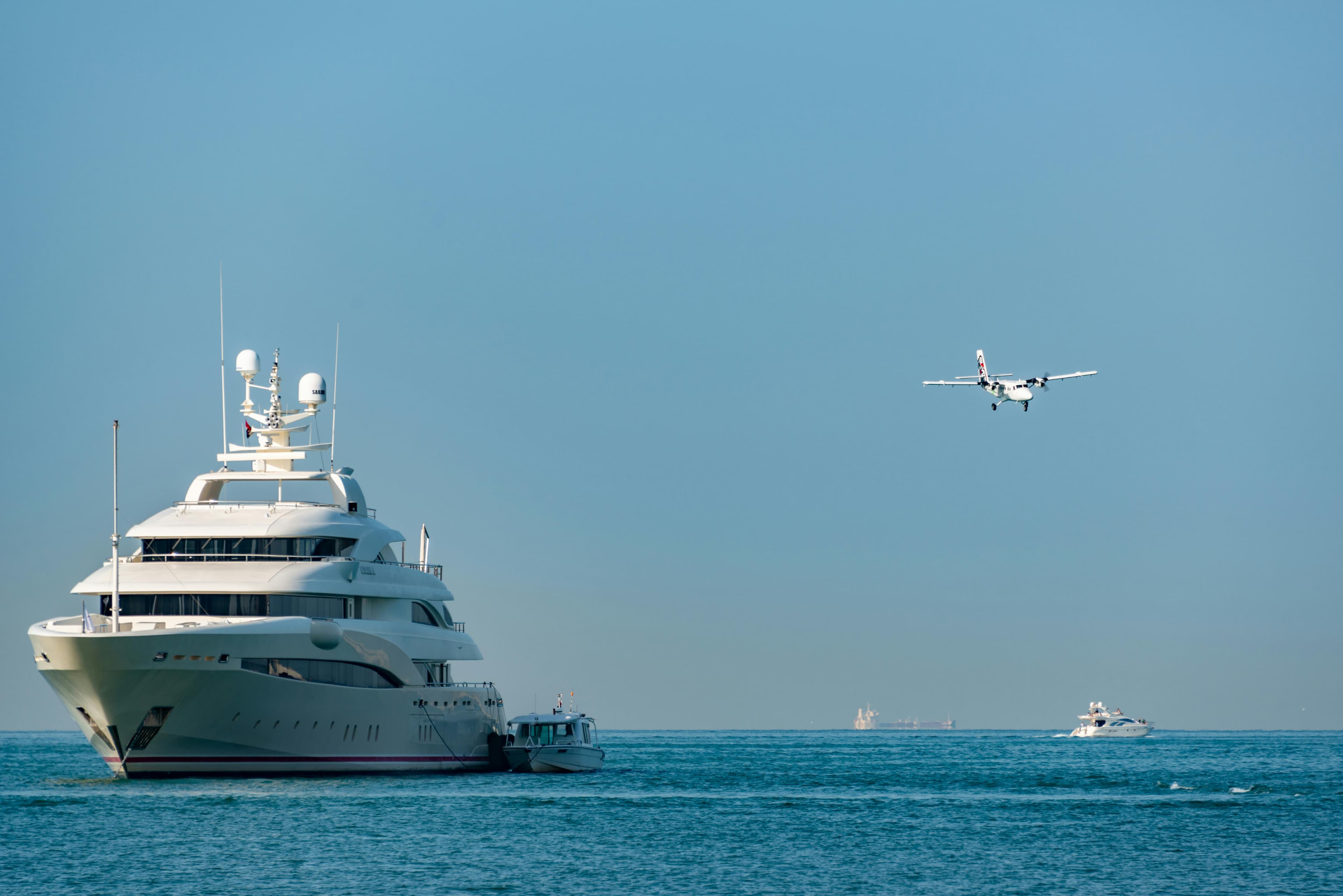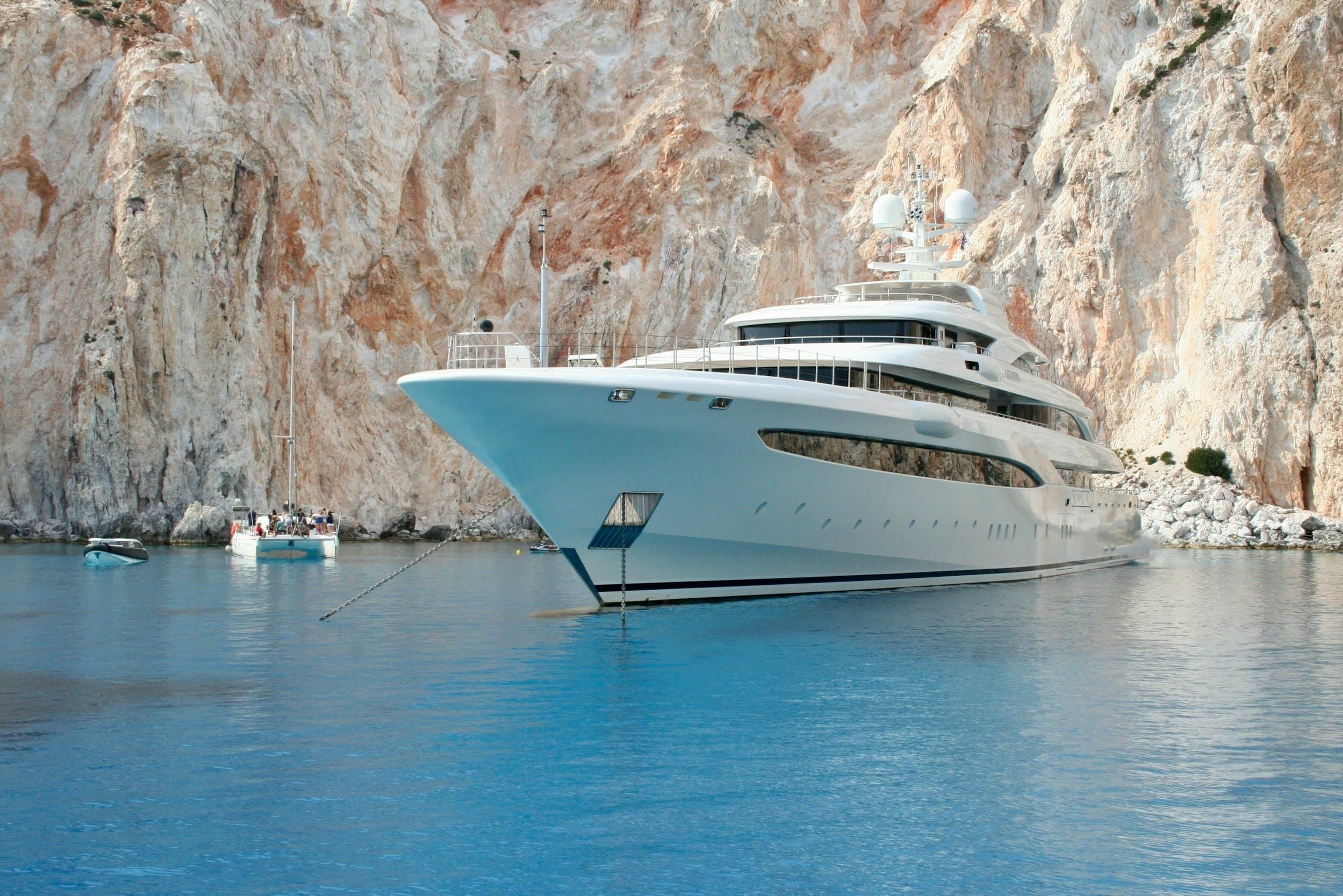
Most first-time charter clients ask the wrong opening question. They ask which boat. The right opening question is which water — because the Western Mediterranean and the Caribbean are not interchangeable products with different price tags. They are two distinct trips, run by different crews, in different sea states, with different rhythms. Pick the wrong one for your group and the boat barely matters.
We charter both basins every season. Below is the framework we walk first-time clients through before anyone looks at a single brochure.
Start with the week, not the boat
A charter week has a shape. The shape is set by how far apart the anchorages are, what the wind does in the afternoon, what time the sun goes down, and what's open ashore when you get there. The Western Med and the Caribbean answer those questions very differently.
In the Western Med — call it the run from the Côte d'Azur down through Corsica, Sardinia, and the Balearics — the cruising distances are longer and the days are structured around port time. You'll often run two to four hours between anchorages, swim and lunch on the hook, then move into a marina or stern-to berth for the evening so you can walk into town for dinner. The boat is your platform. The towns are the destination. Saint-Tropez, Portofino, Bonifacio, Porto Cervo, Ibiza — these are not backdrops, they are the point.
In the Caribbean — and here we mostly mean the BVI, the Leewards down through St. Barths and St. Martin, and the Grenadines for the more experienced — the distances are shorter and the days are structured around the water. You wake up on a mooring ball off a beach, swim before breakfast, run an hour to the next island, swim again, eat lunch on board, snorkel, maybe go ashore for a sundowner at a beach bar, then back to the boat for dinner that the chef has been working on since two. The boat is the destination. The islands are the texture.
Neither is better. They are different weeks. If your group's idea of a great vacation is long lunches ashore, late dinners in town, and shopping in the afternoon, the Med is the right answer. If it's swim, eat, swim, sleep, and you do not want to put on a collared shirt for seven days, the Caribbean is the right answer. We walk through this on the yacht charter intake call before we ever talk hulls.
Sea state, weather windows, and what gets canceled
This is the part most first-timers underestimate.
The Western Med in July and August is generally calm in the morning and builds in the afternoon. The mistral can shut down a Corsica-to-Sardinia crossing for two days. The meltemi doesn't reach this far west, but the local thermals — the tramontane, the libeccio — absolutely will reshape your itinerary. A good captain plans the week as a series of options, not a fixed route. If you have a guest who gets seasick, the Med shoulder days can be uncomfortable, particularly the open crossings.
The Caribbean in high season — December through April — has steady trades, usually 15 to 20 knots out of the east-northeast. That's actually more wind than the Med most days, but the islands break it up. You're rarely in open ocean for more than an hour at a time in the BVI or the Leewards. The water is warmer, the swell is shorter-period, and seasickness is much less of an issue for most people. Hurricane season runs June through November and the serious charter fleet is largely repositioned or hauled out — not a window we book first-timers into.
The practical implication: if your trip is locked to a specific week and you cannot move, the Caribbean in season is the more forgiving choice. The Med has more weather variables that can rearrange a day.
What "itinerary" actually means on a charter
A charter itinerary is not a tour. It's a planning document the captain uses to negotiate with the weather. On a well-run boat, you'll have a preference sheet conversation before the trip and a daily conversation onboard — usually over coffee — about what the wind is doing and what makes sense. The fewer fixed reservations you have ashore, the better the week tends to go. This is more true in the Med, where dinner reservations in August in Porto Cervo are a real constraint, than in the Caribbean, where most beach restaurants take same-day calls.
Crew culture and what the day feels like
This is the part nobody puts in the brochure and it matters more than the hull.
Med crews — particularly on the larger motor yachts working the Riviera circuit — are formal. Service is European-hotel standard. Uniforms change for service. The chef has likely cooked in a Michelin kitchen. The interior team irons your laundry the day you board. Lunch is plated. Dinner is plated. You will be addressed as Mr. and Mrs. unless you spend three days insisting otherwise. This is what some clients want and what others find exhausting.
Caribbean crews — particularly on catamarans and the smaller motor yachts in the 80–120 foot range — are warmer and more casual. Service is excellent but the register is different. The chef will come up and ask what you felt like. The mate will hand you a snorkel and tell you which side of the rock to swim around. You'll know everyone's first name by lunch on day one. Nobody is wearing closed-toe shoes.
This isn't a quality difference. It's a culture difference, and it correlates loosely with boat type and basin. There are casual Med crews and formal Caribbean crews. But the average is what we just described, and the average is what your group will experience.
If your group includes kids, the Caribbean catamaran fleet is built for it — shallow draft, water toys deployed off the back step, mate who runs the inflatable as a dedicated kid taxi. The Med can absolutely do family trips, but the boats are bigger, the formality is higher, and the kids spend more of the day waiting for grown-up things to finish. Worth thinking about honestly before you book.
Money, and where it actually goes
Base rates between the two basins overlap heavily. A 150-foot motor yacht charters for roughly the same weekly rate in St. Barths as in Saint-Tropez. Where the Caribbean tends to come in lower is the APA — the advance provisioning allowance that covers fuel, food, dockage, and port fees during the trip.
Med APAs run high because dockage is expensive. A stern-to berth in Porto Cervo or Capri in August can run several thousand euros a night for a 50-meter boat. Fuel burn is higher because you're moving more. Port taxes and the new short-stay fees in places like the Balearics add up. Plan on an APA of 30–35% of the base in the Med, occasionally more.
Caribbean APAs are lower because most nights you're on a mooring ball or at anchor, not in a marina. Fuel burn is lower because the legs are shorter. Provisioning is more expensive island-to-island — almost everything is imported — but the total APA usually lands around 25–30% of base.
The other line item nobody talks about is getting there. Nice, Olbia, and Palma are all served by a tight private aviation network with reasonable handling. St. Thomas, St. Martin, and Antigua are the main Caribbean entry points, and the private aviation leg from the U.S. East Coast is a straightforward run on a midsize or super-midsize jet. From Nashville or further west, expect a tech stop or a heavy jet. We coordinate the air-to-yacht transition as a single piece of the trip, not two separate bookings — getting that handoff wrong is how a charter starts late.
A short framework for picking
If you've made it this far, here's how we'd actually decide.
Choose the Western Mediterranean if your group wants towns, restaurants, shopping, and history as much as water; if you have older kids or no kids; if you want the boat to be a five-star floating hotel; if your week can flex by a day or two for weather; and if July, August, or early September is when you can travel.
Choose the Caribbean if your group wants water above everything else; if you have kids of any age; if you want a casual register and short cruising legs; if your week is fixed and you need a forgiving forecast; and if you can travel between mid-December and mid-April.
If the answer is genuinely both — and for many first-time charterers it is — start with the Caribbean. It's the gentler introduction to living on a boat for a week. The Med rewards a second charter, when you already know what you like and your preference sheet is sharper.
When you're ready to put real dates and a guest count against this, reach out and we'll send back two or three boats in each basin that fit, with crew references we can vouch for personally. No portal, no scrolling, no slide deck.
FAQ
How far in advance do I need to book a first charter?
For peak Med weeks — the last two weeks of July through mid-August — the strong boats are spoken for by January, sometimes earlier. For Caribbean Christmas and New Year's, book by the previous spring. For Caribbean January through March, three to five months out is usually workable. Shoulder seasons in both basins are easier and often a better first experience anyway.
Should my first charter be a sailing yacht, a catamaran, or a motor yacht?
Unless you're a sailor and the sailing itself is the point, a motor yacht or a catamaran is almost always the right first charter. Motor yachts give you space, stability, and crew capacity. Catamarans give you shallow draft, water access, and a casual feel — particularly good for families in the Caribbean. Pure sailing yachts are wonderful but they're a more particular taste.
What does a realistic all-in budget look like for a week?
For a 100–120 foot motor yacht for eight guests, plan on a base rate plus APA plus crew gratuity of 10–20%. In the Caribbean, that all-in number tends to land 15–20% lower than the same-size boat in the Med, mostly because of dockage and fuel. We'll model the actual numbers for any specific boat before you sign.
How does the preference sheet work?
About three to four weeks before the trip, you'll fill out a document covering food preferences, allergies, drinks, music, activity level, sleep schedule, and any specific places or experiences on your list. The chef and chief stew build the week from it. The more honest and specific you are — including what you don't like — the better the trip goes. Generic answers produce generic weeks.
Can we combine a charter with a villa stay on either end?
Yes, and we encourage it for first-timers, especially in the Med. Two or three nights in a villa before you board lets you adjust to the time zone, see the port town properly, and arrive at the boat rested rather than jet-lagged. Same thing on the back end if you want to decompress before flying home.
Is tipping really 15–20%?
The convention is 10–20% of the base charter fee, paid to the captain at the end of the trip and split among the crew. 15% is a fair midpoint for good service. The crew is working 18-hour days for you. If the week was excellent, tip accordingly; if something was genuinely off, talk to us before the trip ends so it can be fixed in real time rather than reflected only in the envelope.
A charter is a long week of small decisions made by people you've never met, on your behalf, while you're swimming. The basin you pick sets the tone for all of them. Pick the one that fits the group you actually have, not the trip you saw in someone else's photos.