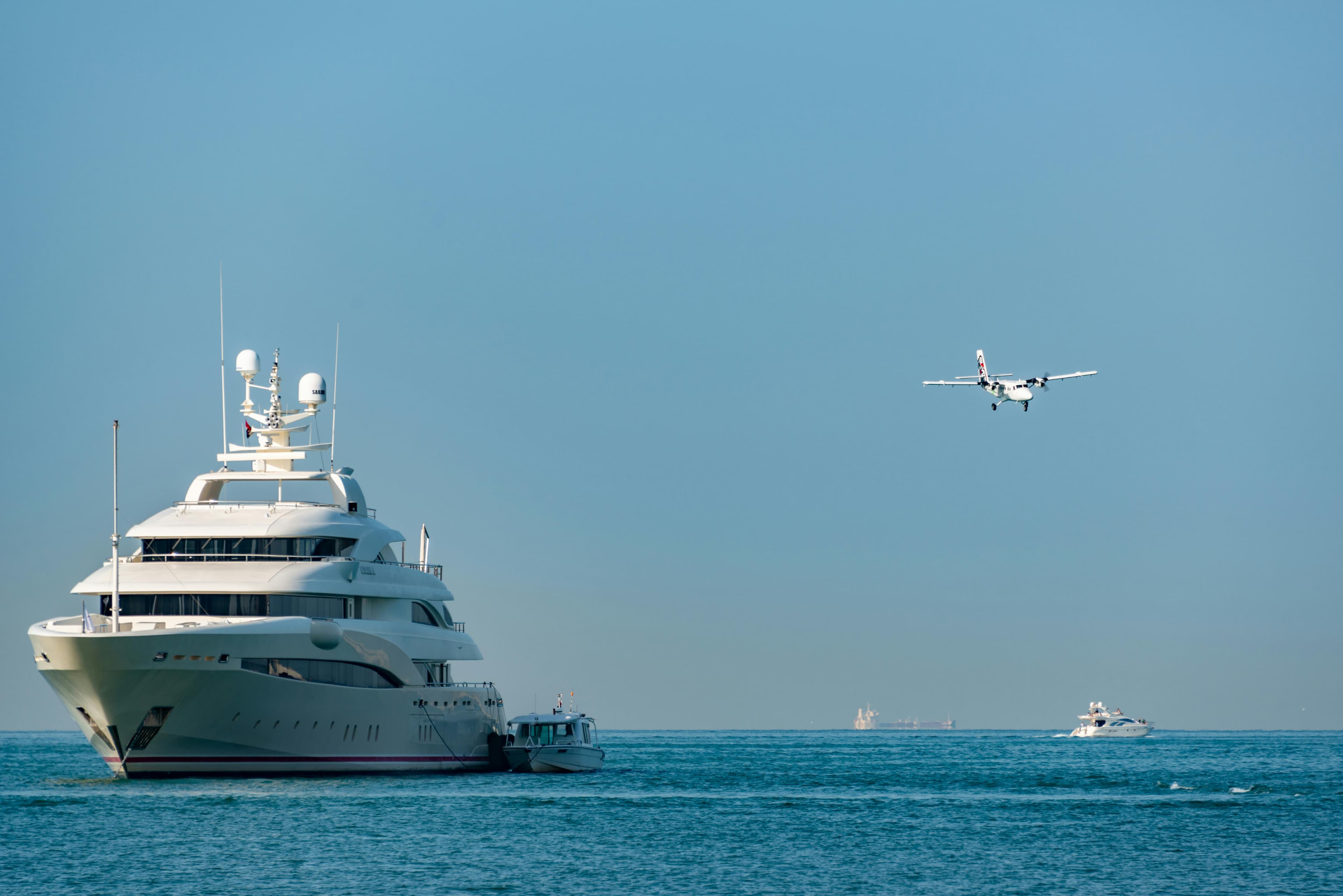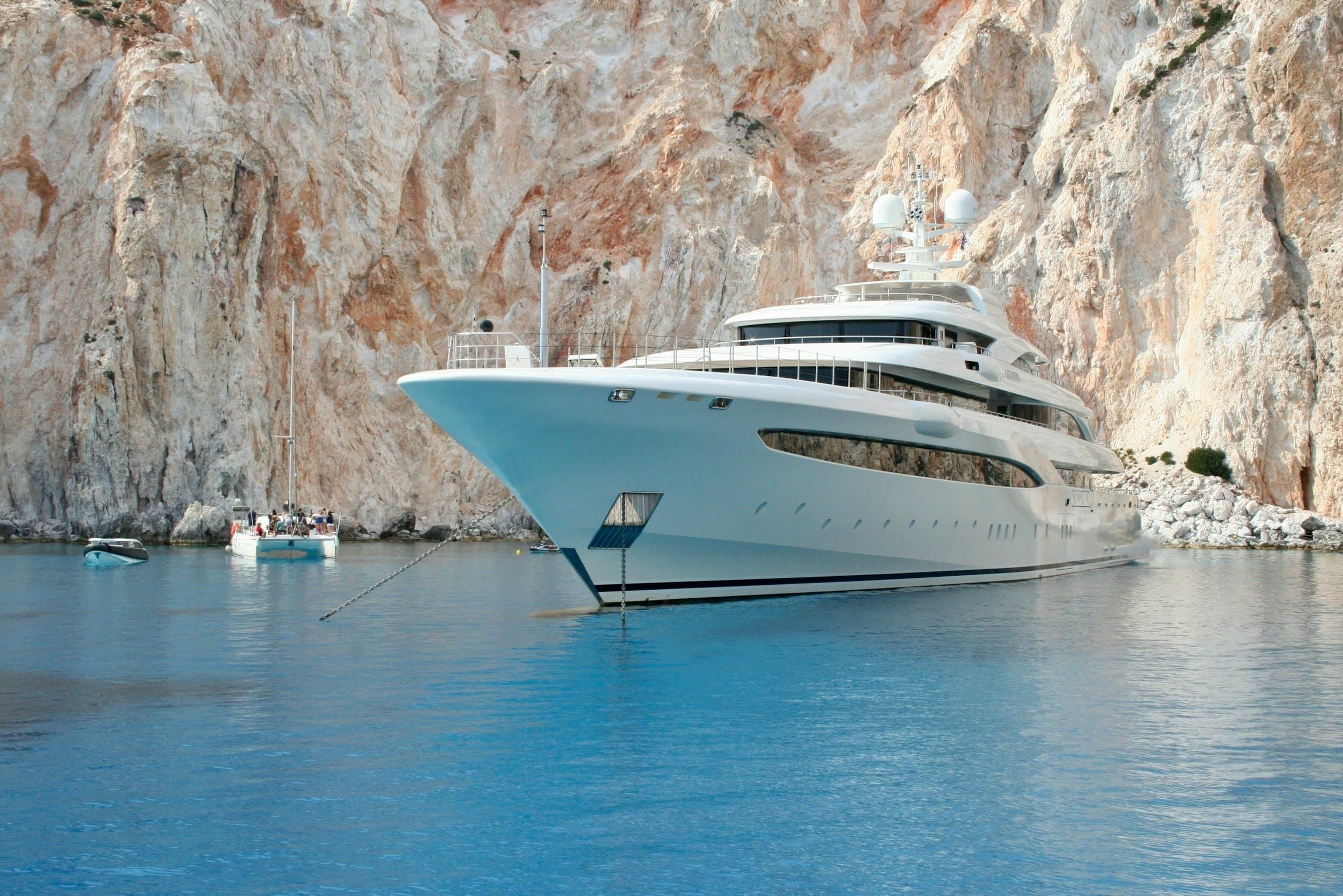
A Monaco Grand Prix yacht charter 2025 is not a yacht booking. It's a logistics project that happens to end with you on a flybridge watching Leclerc thread Sainte Dévote on Sunday afternoon. The race runs May 22–25 this year, and if you're reading this in spring expecting to call a broker and slot in, the honest answer is that the prime berths in Port Hercule were spoken for sometime in late 2023. That doesn't mean there's nothing to do — it means the shape of the work is different than you might expect, and the decisions you make in the next two weeks will determine whether the trip is the one you wanted or a compromise wearing the right postcode.
What follows is the operational reality from inside the trade — what a Port Hercule berth actually is, why charter rates and syndicated berth prices are two different conversations, how race-week provisioning gets handled when every dock cart in the principality is moving at once, and the jet leg from Teterboro into Nice that most clients underestimate. None of this is brochure copy. It's what you'd hear on the phone if you called us.
Port Hercule berths: the geometry problem
Monaco's working harbor has roughly 700 berths across Port Hercule and Port de Fontvieille combined, and during Grand Prix week the front row — the Quai des États-Unis and the T-jetty positions facing the swimming pool complex — is the only real estate that matters. Those berths sit directly on the circuit between Tabac and the Nouvelle Chicane. From the right yacht you can see cars on track, the pit exit, and the podium. From a back-row berth in Fontvieley or, worse, an anchorage off Cap d'Ail, you see masts and hear the cars on a five-second delay through other people's hulls.
The Société d'Exploitation des Ports de Monaco controls allocations, and Grand Prix berthing is governed by a separate tariff and a separate application process from regular seasonal mooring. Boats over 50 meters are essentially competing for a few dozen primary positions. Lead time on the front row is 18 to 24 months minimum — which is to say the 2026 race is the realistic planning window if you're starting now. For 2025, what's available at this point is sublet capacity: a charter yacht whose principal cancelled, a syndicated berth where one cabin opened up, or a position in the second or third row that becomes a different kind of trip.
Charter the whole boat or buy into a berth
These are two different products and people confuse them constantly. A full charter means you take the yacht for the week — typically a Saturday-to-Saturday or Wednesday-to-Monday window — with the captain, crew, tender, and the berth all included in the contract. A syndicated berth (sometimes marketed as a "Grand Prix package" or "hospitality berth") means you're buying a cabin or a day pass on a yacht someone else has chartered, alongside other guests you don't know.
Full charter on a 40–60 meter yacht for race week generally runs in the range you'd expect for a peak Mediterranean week plus a significant Grand Prix premium — the premium is real, it reflects the berth fee, the crew overtime, the provisioning surcharge, and the simple fact that the boat cannot reposition for another charter that week. Syndicated berths are sold per cabin or per day and are a fraction of that, but you're sharing the deck, the chef, and the bathrooms with strangers who paid the same price you did. Neither is wrong. They're different trips. If you're traveling with eight people who actually like each other, charter the boat. If you're two people who want to see the race from the right hull and don't need privacy at breakfast, the syndicated route exists and works.
We broker both, and the conversation we have with our yacht clients before signing anything is about who's actually on board and what Sunday afternoon is supposed to feel like.
Race-week provisioning is its own job
The boat is provisioned by the chef and the chief stewardess — that's standard. What's not standard is doing it during a week when 40,000 additional people are inside a two-square-kilometer principality, when the Boulevard Albert 1er is closed because it's the main straight, and when every supplier from Nice to Ventimiglia is on allocation.
Good crews start the provisioning conversation with the principal six weeks out. The preference sheet — the document where you specify everything from your preferred sparkling water to which side of the bed you sleep on — needs to be back to the boat by early April for a late-May race. After that, the chef is sourcing: which producer in the Var the heirloom tomatoes come from, whether the langoustines are coming up from a specific boat in Sète, what the pastry program looks like for race day when nobody actually wants to eat a full lunch but everyone wants something in their hand at 3 p.m.
The operational detail most people miss: dock access closes. Once the circuit barriers go up — typically the Monday of race week — heavy provisioning has to come in by tender from Cap d'Ail or by foot through specific crew gates with a SEPM credential. A chef who hasn't run a Monaco week before will get caught short on something. A chef who has run six of them will have the walk-in stocked by Sunday night the week prior and will be doing daily top-ups by tender. When you're vetting a charter, ask the broker how many Monaco weeks the current crew has done together. The answer matters more than the boat's build year.
The jet leg: TEB to NCE, and why the return is harder
Most of our U.S. clients fly Teterboro to Nice Côte d'Azur direct. It's a comfortable mission for a Global 6000, 7500, or Gulfstream G650/G700 — roughly 7 to 7.5 hours eastbound depending on winds, well within range with full pax and bags. Falcon 8X and Global 5500 also handle it cleanly. Heavy and ultra-long-range is the right category here; a super-mid like a Challenger 350 will need a fuel stop, usually Keflavík or Shannon, and on the return westbound that stop is almost guaranteed regardless of aircraft.
Nice handles the inbound traffic well. The airport runs slot coordination during Grand Prix week, and your operator needs to file for an arrival slot — not optional, not a formality. Slot windows are typically ±15 minutes and missing yours means holding or diverting to Cannes-Mandelieu (which can't take heavy iron) or Saint-Tropez. The helicopter transfer from NCE to Monaco is seven minutes with Monacair or Héli Sécurité; book it as part of the arrival sequence, not as an afterthought from the FBO.
The return is the harder leg and the one that traps people. Race ends Sunday around 5 p.m. local. Every principal in the harbor wants to be wheels-up Monday morning. NCE departure slots Monday between 9 a.m. and noon are the single most contested window in European business aviation that week. If your operator hasn't filed and confirmed by the Friday before, you are flying Monday afternoon or Tuesday. We plan returns for Tuesday morning by default and treat Monday departure as a bonus if the slot lands. For more on how the private jet side of the trip gets coordinated against the yacht week, that's a longer conversation.
Ground in Monaco during race week is its own animal — the principality is largely closed to private vehicles, transfers happen by foot, scooter, or pre-credentialed car with a specific access pass. We coordinate ground separately for every Monaco trip because assuming the yacht's tender or a hotel car will handle it is how people miss dinner reservations.
What 2025 actually looks like from here
If you're starting the conversation now for the May 22–25 race, here's the honest read. Front-row Port Hercule on a full charter: effectively closed unless a cancellation surfaces, and we do see one or two each year. Second-row charter on a 35–50 meter boat: possible, with active work. Syndicated berth on a quality program: available, and some of these are excellent — the better operators run the same boats every year with crews that know the harbor. Hotel-and-grandstand combinations: also available, and for two people who want to see one race and aren't planning to do this annually, often the smarter call than a compromised yacht position.
What we won't do is put you on a back-row berth in Fontvieille and pretend it's a Grand Prix yacht week. It isn't. The whole point of the boat is the view of the circuit, and if the boat doesn't have that, the trip is something else and should be priced and planned as something else.
For 2026 — May 21–24 — the planning window is open now and the front row is where the conversation should start. Talk to us early and we'll walk through the specific yachts, captains, and crews we'd put forward, with honest notes on each.
FAQ
How far in advance do I need to book a yacht for the Monaco Grand Prix?
For a front-row Port Hercule berth on a full charter, plan on 18 to 24 months minimum. The 2026 race (May 21–24) is the realistic window if you're starting now. For 2025, what's available at this stage is cancellation inventory, second-row berths, or syndicated cabins on yachts already chartered.
What's the difference between a full yacht charter and a syndicated berth?
A full charter means you take the entire yacht — crew, tender, berth, and all cabins — for the week, typically Saturday-to-Saturday. A syndicated berth is a per-cabin or per-day purchase on a yacht someone else has chartered, sharing the deck and amenities with other guests. Privacy, cost, and the feel of the trip are completely different.
Can I fly direct from Teterboro to Nice for the race?
Yes, on the right aircraft. Heavy and ultra-long-range jets — Global 6000/7500, Gulfstream G650/G700, Falcon 8X — handle TEB-NCE direct in roughly 7 to 7.5 hours eastbound. Super-mids generally need a fuel stop, and the westbound return often requires one regardless of aircraft.
Why is the Monday after the race so hard to fly out of Nice?
NCE runs slot coordination during Grand Prix week, and Monday morning between 9 a.m. and noon is the most contested departure window in European business aviation that week. If your operator hasn't filed and confirmed slots well in advance, you'll be leaving Monday afternoon or Tuesday morning. We plan Tuesday departures by default.
Is provisioning really an issue if the chef is good?
It's an issue regardless of how good the chef is, because dock access closes once the circuit barriers go up Monday of race week. After that, supplies move by tender or through specific crew gates. Crews experienced in Monaco stock the walk-in the week prior and run daily top-ups by tender. Crews doing it for the first time get caught short.
What if the front row is fully booked — is the trip still worth doing?
Depends what you want. A second-row charter with a great crew can be a strong week. A back-row berth in Fontvieille with no view of the circuit is a different trip and should be planned as such — sometimes a hotel and a grandstand seat is the better call for that situation. We'll tell you honestly which version of the week you're actually buying.
The race is one afternoon. The week around it is what you're really booking, and the work to make that week land starts much earlier than people expect.