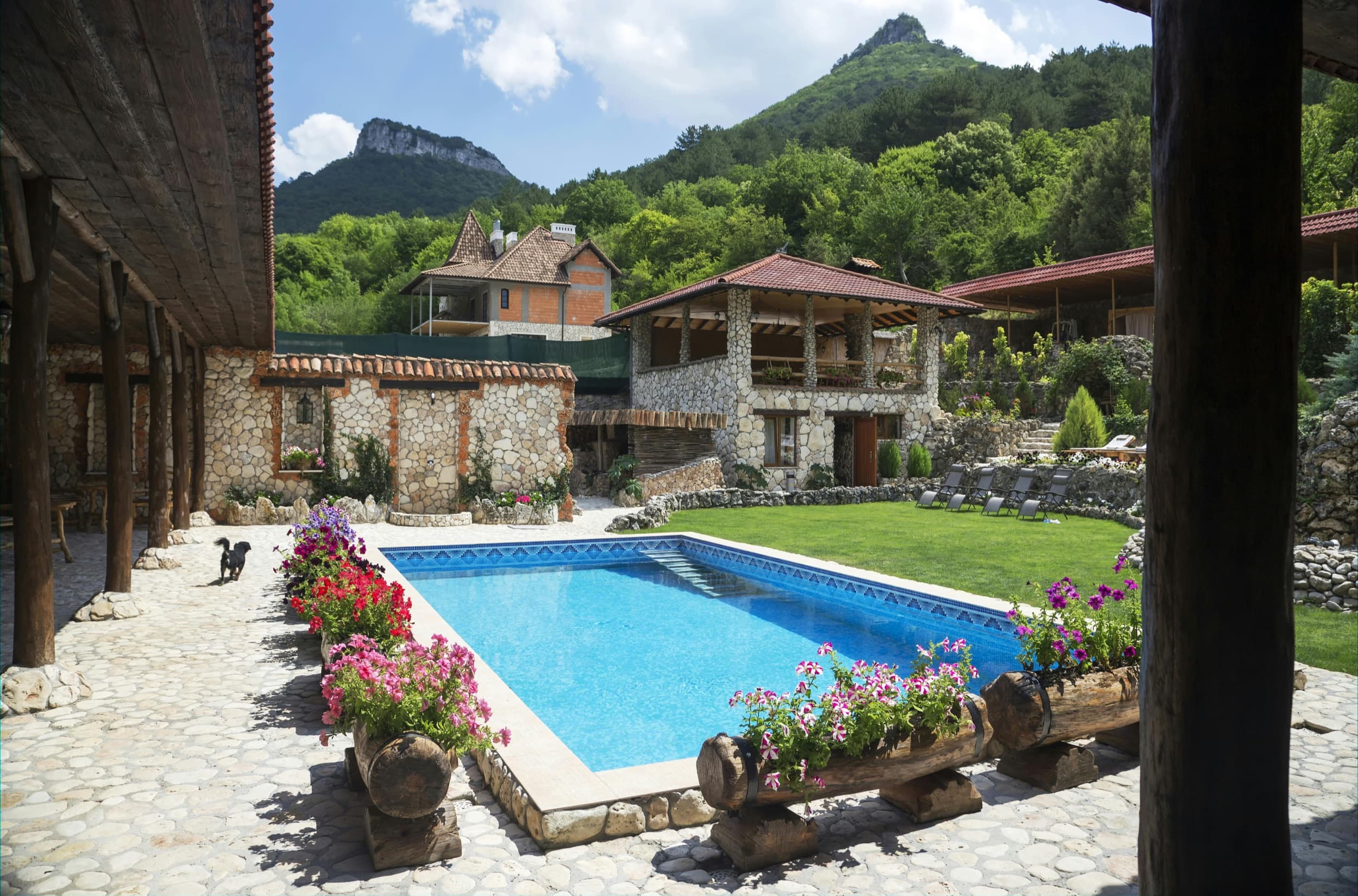
A private jet Tuscany summer villa Italy trip is not one decision. It is about thirty of them, stacked, and most of them happen before you ever step on the airplane. Nashville to a stone house above Lucca in July is a real piece of work — a transatlantic crew swap, a customs clearance into Schengen, a ground handover at a regional Italian field, and a villa that has to be loaded with the right people before you arrive. Done well, you wake up the second morning to espresso on a terrace and forget any of it happened. Done poorly, you spend the first afternoon waiting on a van in a Pisa parking lot.
This is what the week actually requires, written from the dispatch side of the desk.
The Transatlantic Routing from BNA
Nashville does not have a nonstop business jet that crosses the Atlantic comfortably with a full cabin in summer headwinds. BNA can launch a Global 6000 or a G650 direct to PSA or FLR in the right wind pattern, but the more common — and frankly more comfortable — play is a tech stop, or a positioning leg into the Northeast and a fresh crew off TEB or BDL.
Here is why the Teterboro repositioning matters. A heavy jet flying BNA–Pisa direct is looking at roughly nine to ten hours block time depending on the jet stream, and FAR Part 135 duty limits are real. Most operators will not dispatch a single crew on that sector — they will either pre-position a relief crew, route through a gateway, or stage the trip as Nashville to TEB the evening before, overnight the airplane, and depart Teterboro at a civilized hour for an arrival in Tuscany the following morning.
The overnight in the New York area is not a hassle. It is the trip working correctly. You sleep in a bed instead of a cabin seat, the airplane gets fueled and catered without time pressure, and you arrive into Italy on European morning instead of stumbling off at 3 a.m. body clock with a four-hour drive still ahead.
For aircraft selection — and this is what we work through on every transatlantic — the cabin matters more than the brochure speed. A Global 6000 or 7500, a G650, a Falcon 8X. These are the airplanes built for the sector. A Challenger 605 can do it with a fuel stop in Bangor or Gander, and that is a perfectly fine trip if the cabin works for your group. We talk through this more on the jets page, but the short version is: aircraft category drives every other piece of the day.
PSA vs FLR — and Why It Usually Isn't FLR
Pisa (LIRP/PSA) and Florence (LIRQ/FLR) are the two obvious arrival options for a Tuscan villa week. They are not interchangeable.
Florence is closer to the city and to most of Chianti, but the runway is short — under 6,000 feet — and the approach into FLR has terrain on both sides and a curved visual that operators do not love at MTOW arrivals. Many heavy jets simply will not go in there, or will go in light. In summer afternoons with thermals coming off the hills, even more operators say no.
Pisa is the workhorse. Long runway, full ILS, 24-hour customs, and an FBO operation that has handled inbound transatlantic traffic for decades. From PSA you are about 90 minutes by car to most of central Tuscany, two hours to Montalcino. The drive is part of the trip — vineyards, the Apennine foothills, lunch somewhere along the way if you build it in.
Unless your villa is east of Florence and you are flying a midsize jet, plan for Pisa. Build the ground transfer into the schedule, not as an afterthought.
What a Staffed Villa Actually Requires
This is where most first-time Italy trips go sideways. People book the villa the way they book a hotel suite — pick the photos, send the deposit, show up. A staffed villa is not a hotel. It is a house that needs to be activated for your specific week, and the activation is the entire point.
A proper staffed villa in Tuscany — eight to twelve bedrooms, a private chef, housekeeping, a property manager, a driver on call — runs on a preference sheet. Not a vague one. The kind of preference sheet that asks what time you want coffee on the terrace the first morning, whether anyone in the group does not eat pork, what the children drink, whether you want the pool heated, whether you want fresh flowers cut from the garden or none at all. The chef wants to know about allergies four weeks out, not the day you arrive, because he is sourcing from people he has worked with for fifteen years and they do not stock for last-minute changes.
This is the difference between a villa week and a hotel stay. The hotel optimizes for throughput. The villa optimizes for your trip. By day two the housekeeper knows how you take your coffee. By day four the chef has stopped asking and is just feeding you the way you want to be fed.
Staffed Villa vs Agriturismo — They Are Not the Same Trip
Agriturismi are wonderful. They are working farms with a few rooms and a long table, often family-run, often the best meal you will eat in Italy. They are not a private trip. You are sharing the property with other guests, the kitchen runs on the family's schedule, and the experience is intentionally communal.
A staffed villa is the inverse. The property is yours for the week. The staff is yours. The chef cooks for your group only, on your schedule, with the menu shaped around what you actually want to eat. If you are traveling as a family of ten or with three couples, the math works out close to even on a per-person basis once you compare a private villa with chef included to ten hotel suites and ten restaurant dinners — and the experience is not in the same category.
If the goal is a real Italian week with kids in the pool and long lunches that drift into the afternoon, the staffed villa is the trip. If the goal is to chase Michelin stars in three different regions, do that differently.
The July–August Window — and Why It Punishes the Unprepared
July and August are when everyone in Europe goes to Tuscany. That is not a reason to avoid it. It is a reason to plan it correctly.
The heat is real — afternoon highs in the upper 90s through much of inland Tuscany, and the stone houses without serious AC become uncomfortable. Confirm the AC situation in writing before you book. Many older villas have it in the bedrooms only. That is fine if you know.
The restaurants book up. The good ones — and there are not as many as the magazines suggest — are reserved weeks out for July and August. Your villa's property manager handles this if you give them the framework early. Tell them which nights you want to eat in, which nights you want to go out, what kind of meal each one is. Ferragosto, August 15, is the Italian summer holiday. Half of Italy is on vacation. Plan around it.
Ground is the part that quietly unravels weeks like this. You need a driver who knows the back roads to your villa, not a black-car service running GPS. The drive from Pisa is fine until you turn off the SS and end up on a single-lane gravel road with stone walls on both sides — that is when you want a local. We talk about this on the ground services page, and it is genuinely the most under-planned piece of a private trip.
Harvest, the Late August Tail
If you can stretch the trip into the last week of August or the first week of September, the harvest is starting in the southern Tuscan vineyards — Montalcino, Montepulciano, the Maremma. A private chef at harvest is a different meal than a private chef in mid-July. The tomatoes are at peak. The first pressings are coming in. The wild boar season has not started but the cinghiale ragù from last year's freezer is being used up. Ask your chef what he wants to cook. Then let him.
Putting the Week Together
A realistic shape for the trip, planned eight to twelve weeks out:
- Twelve weeks out: villa selected, deposit in, preference sheet started. Aircraft category discussed and a quote built. Travel insurance reviewed if anyone in the group has medical considerations.
- Eight weeks out: preference sheet finalized with the property manager. Chef in conversation about menus and dietary needs. Restaurant nights identified and reservations being placed. Ground transfers booked.
- Four weeks out: aircraft assigned by the operator. Crew named. Catering ordered for the transatlantic leg. Villa staff briefed on arrival window.
- One week out: wind and weather review for the transatlantic. Customs paperwork (APIS, EU entry) submitted. Ground confirmed at PSA.
- Day of: car at the curb in Nashville. Wheels up. The work is done.
When we build a quote for a trip like this, the airplane is one line of the conversation. The week is the rest of it.
This is the part of the job that does not show up in marketing copy. It is also the only part that actually matters.
FAQ
Can a private jet fly nonstop from Nashville to Pisa or Florence?
A Global 6000, Global 7500, G650, or Falcon 8X can typically fly BNA to PSA nonstop with the right wind pattern and a reasonable cabin load. Most operators prefer a Northeast repositioning the night before and a fresh-crew departure from TEB the next morning to keep the trip inside duty limits and the arrival in European morning rather than the middle of the night.
Should we fly into Pisa (PSA) or Florence (FLR)?
Pisa is the right answer for almost every transatlantic arrival. The runway is long, customs is 24-hour, and the FBO is built for heavy international traffic. Florence has a short runway, terrain on the approach, and operating limits that many heavy jets will not accept — particularly on summer afternoons. The drive from Pisa to most of central Tuscany is about 90 minutes.
What is the difference between a staffed villa and an agriturismo?
A staffed villa is a private property rented exclusively for your group, with a chef, housekeeping, and a property manager working only for you for the week. An agriturismo is a working farm with shared accommodations and a communal dining experience — wonderful for a meal or a single night, but not a private trip. For a family or multi-couple week, the staffed villa is the trip.
How far in advance should we book Tuscany for July or August?
Eight to twelve weeks is the realistic minimum for a staffed villa with a chef in peak summer. The best properties book six months out for July and August, and the chef needs four weeks to plan menus and source ingredients properly. Restaurant reservations and ground transfers fall into place around the villa once it is locked.
Do we need a driver in Tuscany or can we rent cars?
For a villa week, a driver on call beats rental cars. The roads to most rural Tuscan villas are narrow and unmarked, parking in the hill towns is genuinely difficult, and Italian wine at lunch is part of the trip. A local driver who knows the property and the region removes the friction that quietly ruins days.
What is Ferragosto and does it affect our trip?
Ferragosto is August 15, the Italian summer holiday. Much of Italy closes — restaurants, shops, even some villa staff want the day with their families. If your week includes that date, plan a villa-only day around it with the chef cooking a long lunch. Do not plan to be out in the towns or on the road that day.
If you are thinking about Tuscany next summer, the time to start the conversation is now, not in May. The villa, the airplane, and the chef all work better with runway. Reach out when you are ready.