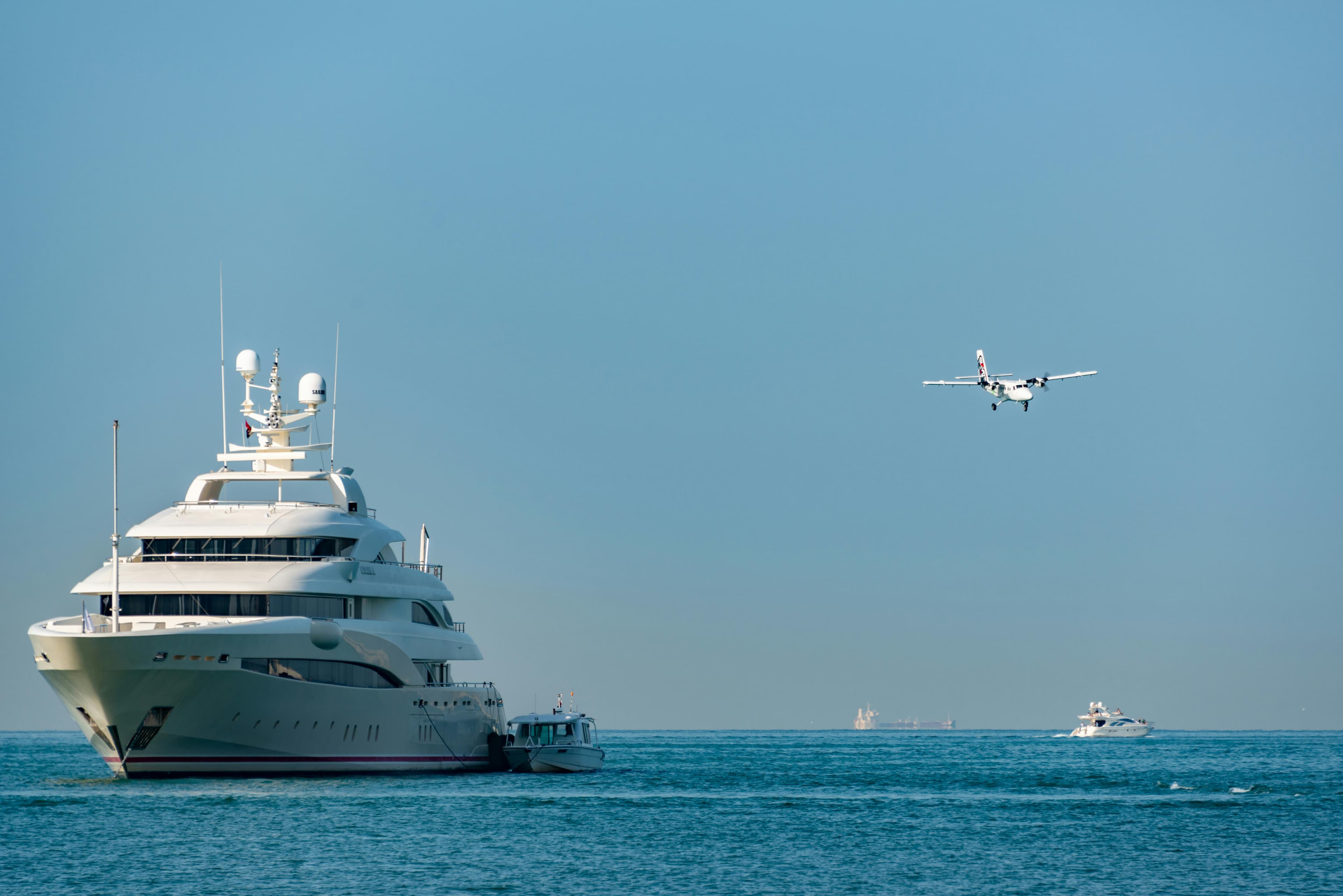
A st barths yacht charter over New Year's is not a booking. It's a logistics operation with a party attached. If you're reading this in October or November thinking about the last week of December — the good news is you're on time. The better news is you're going to have to make a real decision in the first thirty minutes of that conversation: Port de Gustavia stern-to, or hook down in one of the anchorages and tender in. That single choice reshapes every other line of the itinerary, from crew rotations to what your guests wear at seven.
I've watched this week from three sides — as a broker placing the boats, as an operator hearing the captain radio at 0530 about a fouled anchor, and as a friend of a client whose New Year's Eve got rewritten twice in eight hours because nobody wanted to admit the swell had shifted. So this is the operational read. Not what the glossies tell you.
The permit reality nobody explains up front
Start here, because everything else is downstream. Port de Gustavia during the New Year's holiday period runs on a reservation system managed by the Collectivité, and the allocation for yachts above roughly 40 meters is small — the inner harbor takes stern-to Med moorings and the number of berths that can physically handle a 50m+ hull with tender clearance is in the low double digits. Applications for the holiday window typically open in the spring, and by late summer the priority list is set. If you're inquiring in November for a 55-meter berth on December 31, the honest answer is: you are on a waitlist, and your captain will be working the phone.
There is a workaround, and it's the workaround most experienced charter parties actually prefer: anchor in Anse de Colombier, Anse du Gouverneur, or off Corossol depending on wind, and tender your guests into the dinghy dock in Gustavia. The tender ride from Colombier is about twelve minutes in flat water, longer if the north swell is running, which — over New Year's — it often is. Colombier is a marine reserve, so you're on a mooring ball, not dropping ground tackle, and the ball allocation there is also finite.
The permit conversation is why we start yacht conversations six months out for this week specifically. Every other Caribbean week you can move faster. Not this one.
What "stern-to in Gustavia" actually buys you
It buys you a walk-off. That's the whole product. Your guests step from the passerelle onto the quai, and Le Select, Bonito, and the Christopher Columbus statue are inside a five-minute walk. New Year's Eve in Gustavia is a street event as much as a restaurant event — the fireworks go off over the harbor at midnight and every superyacht within sightline lights the boat deck. If your charter is built around a specific dinner at Bagatelle or a party at Nikki Beach that runs past two, walk-off matters. Tender operations after 0100 in a north swell are the kind of thing that ends with a guest's dress in the drink.
It costs you privacy. Stern-to in Gustavia at New Year's means your aft deck is a stage. Every phone on the quai is pointed at your boat. If your principal wants to be seen, that's the feature. If not, it's the bug.
The anchorage case
Anse de Colombier is the answer for most charter groups I've worked with, and here's why. The water is cleaner. The boat is quieter. The crew can actually run a proper breakfast service without a tour boat wake rocking the coffee off the sideboard. And the view from the aft deck at sunset — Île Fourchue to the north, the ridge line of Colombier to the south — is the reason people charter in the Caribbean in the first place.
The operational cost is the tender program. For a group of ten to twelve guests going ashore for dinner in Gustavia, you're running two tenders, two crew per tender, two round trips at minimum, and a pickup window that has to be negotiated before anyone opens a wine list. Your captain will want a hard latest-tender time. Guests, on New Year's Eve, will want to negotiate that time at 0130. This is where charters get tense.
The fix is a preference sheet conversation that actually addresses it. Not "we like Italian food." A real conversation: who in the group is a night owl, who's on European time and fading at ten, whether anyone gets seasick in a tender at night, whether the principal wants the option of sleeping ashore in a villa for the fireworks. Which — for the record — is a legitimate move. Some of our clients pair the yacht with a villa on the island for exactly this reason: the boat is the day program, the villa is the night crash pad on the 31st, and nobody is doing a wet tender ride at 0200 in party clothes.
Weather windows and the swell problem
The northeast trades in late December run 15–22 knots most days, which is fine for a properly sized yacht and uncomfortable on a 30-meter beam-on at anchor. More importantly, the North Atlantic swell events that reach the Leewards in late December are real — swells of 2 to 3 meters at 12+ second periods have shut down the north-facing bays multiple times in the last decade during this week specifically. When Colombier gets untenable, the fleet shifts south to Gouverneur or Grand Cul-de-Sac, and the tender ride to Gustavia goes from twelve minutes to thirty-five, or you're coming in by car from a different anchorage entirely.
A good captain is watching the NOAA offshore forecast and the buoy data from San Juan five days out and adjusting. A great captain is telling you on December 27 that the plan for the 31st is changing and here's option B and option C. That's the difference between a boat you chartered and a flight department on the water.
Sizing the boat to the week, not the group photo
The instinct on a group charter is to go bigger. For St Barths New Year's specifically, I'd push back on that instinct. Yachts in the 35 to 45 meter range have real advantages this week: they fit in more anchorages, they're eligible for more mooring allocations, they can reposition to Anguilla or Barbuda for a day trip without a four-hour steam, and their tenders are often more nimble in Gustavia's dinghy dock crush.
Above 60 meters you're in a different category — Med-style stern-to in Gustavia becomes physically difficult, you're likely at anchor for the whole week regardless of preference, and you're competing for the same handful of large-yacht anchoring positions as everyone else in the fleet. That can still be the right call for the right group. But it should be a deliberate choice, not a default.
Crew ratio matters more than length. For a New Year's week charter with a full guest complement, you want a crew that has done this week before on this island. Ask. Specifically ask your broker how many of the interior and deck crew were aboard for last year's holiday charter. Turnover in yacht crew is real, and the crew that has already worked the Gustavia tender dock at 0100 on December 31 is worth more than an extra half-meter of beam.
Building the week around the boat, not the other way
Here's what a well-planned New Year's week actually looks like in practice, in rough shape. Boarding on the 27th or 28th, ideally after a day on the island first — because arriving at SBH on a King Air and boarding hot is a lot to ask of guests who just flew commercial into SXM. We usually build the arrival day around a villa or hotel so people land, shower, sleep, and board the yacht rested.
The 29th and 30th are day-sail days — Île Fourchue for lunch, Anguilla for the beach clubs at Meads Bay if the wind cooperates, maybe an overnight to Barbuda if the group has the appetite for a longer run. The 31st is the fixed point everything else moves around: are we in Gustavia stern-to, or are we at anchor with a tender plan? January 1 is quiet by design — everyone is destroyed, the boat moves to a calm anchorage, brunch runs until three, and nobody discusses the previous evening in detail. January 2 through disembarkation is the actual vacation, which most first-time charter guests don't realize until they're in it.
Ground on the island matters more than people expect. St Barths is small but the road from the airport to Gouverneur or Saline in holiday traffic is not fast, and the taxi supply is finite. We coordinate ground on-island for every yacht charter so the tender pickup at Gustavia connects to a car that's actually there.
When you're ready to have the real conversation about dates, size, and anchorage strategy, start here. The earlier the better for this week — by the time the November inquiries come in, the useful options have narrowed considerably.
FAQ
How far in advance should I book a St Barths yacht charter for New Year's week?
Six to nine months is the working window. The desirable yachts in the 40 to 55 meter range are typically committed for the holiday week by late summer, and Port de Gustavia berth allocations for larger yachts are set even earlier. Inquiries in October and November aren't hopeless, but you're working from the remaining inventory, and the anchorage-plus-tender plan becomes the realistic path rather than a stern-to in Gustavia.
Is it better to stay at anchor or take a berth in Port de Gustavia?
For most charter groups, anchoring in Anse de Colombier or Anse du Gouverneur and tendering into Gustavia gives you a better boat experience — quieter nights, cleaner water, more privacy. A Gustavia berth is worth the trade only if your itinerary is heavily built around late-night restaurants and the fireworks, and your principal wants the walk-off convenience. The right answer depends on the group's rhythm, not the yacht's size.
What size yacht works best for New Year's in St Barths?
The 35 to 45 meter range is the sweet spot for this week specifically. Yachts in that range fit more anchorages, have easier tender logistics into Gustavia's dinghy dock, and can reposition to Anguilla or Barbuda without a long steam. Above 60 meters you're almost certainly at anchor all week and competing for a small number of large-yacht positions, which is fine if planned deliberately.
What happens if the weather turns bad on New Year's Eve?
The realistic scenarios are a north swell that makes Colombier untenable and forces a shift to a south-facing anchorage like Gouverneur, or trade winds strong enough to complicate tender operations after dark. A good captain is tracking the forecast five days out and presenting alternatives before the 31st. Some clients pair the yacht with a villa on the island as a backup for the evening itself, which removes the late-night tender ride from the equation entirely.
Can we combine a yacht charter with time on land in St Barths?
Yes, and for New Year's week specifically it's often the smarter build. Arriving a day or two early, staying in a villa or hotel to reset from the travel, and then boarding the yacht rested makes the whole week better. Some groups also keep a villa through the 31st specifically so guests have a land option for the fireworks and party program without a wet tender ride home.
Do we need to book flights into SBH or SXM?
SXM is the practical entry point for anyone arriving by private jet in a mid-size or larger aircraft — SBH's runway is short and restricted to specific approved aircraft and pilots. From SXM most charter parties either take the short inter-island hop by King Air or Islander, or arrive by tender or fast ferry depending on the yacht's position. The connection needs to be built into the charter plan from day one, not treated as a separate booking.
This week rewards early planning and honest conversations about how the group actually wants to live for eight days. Get those two things right and the rest is just weather and wine.