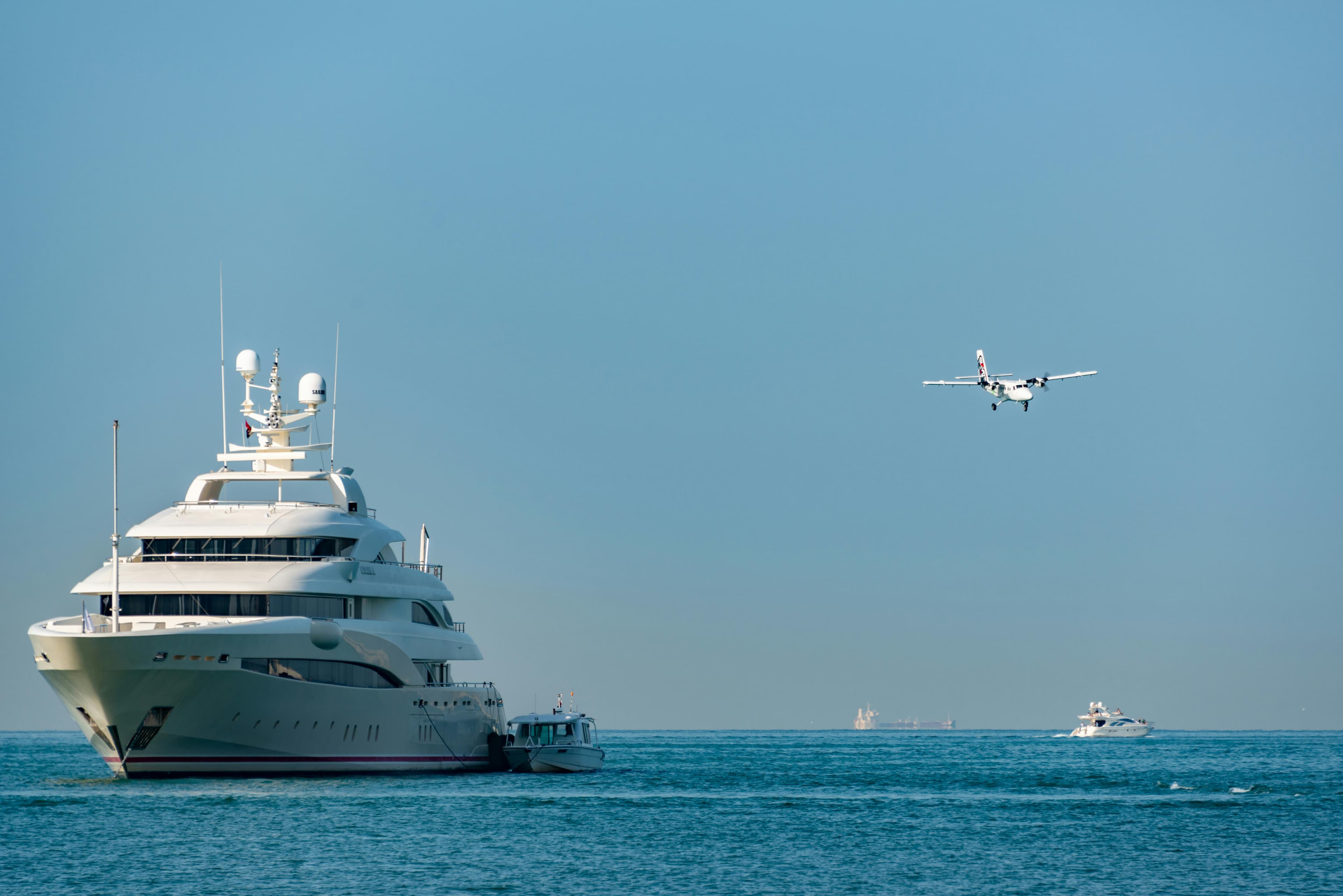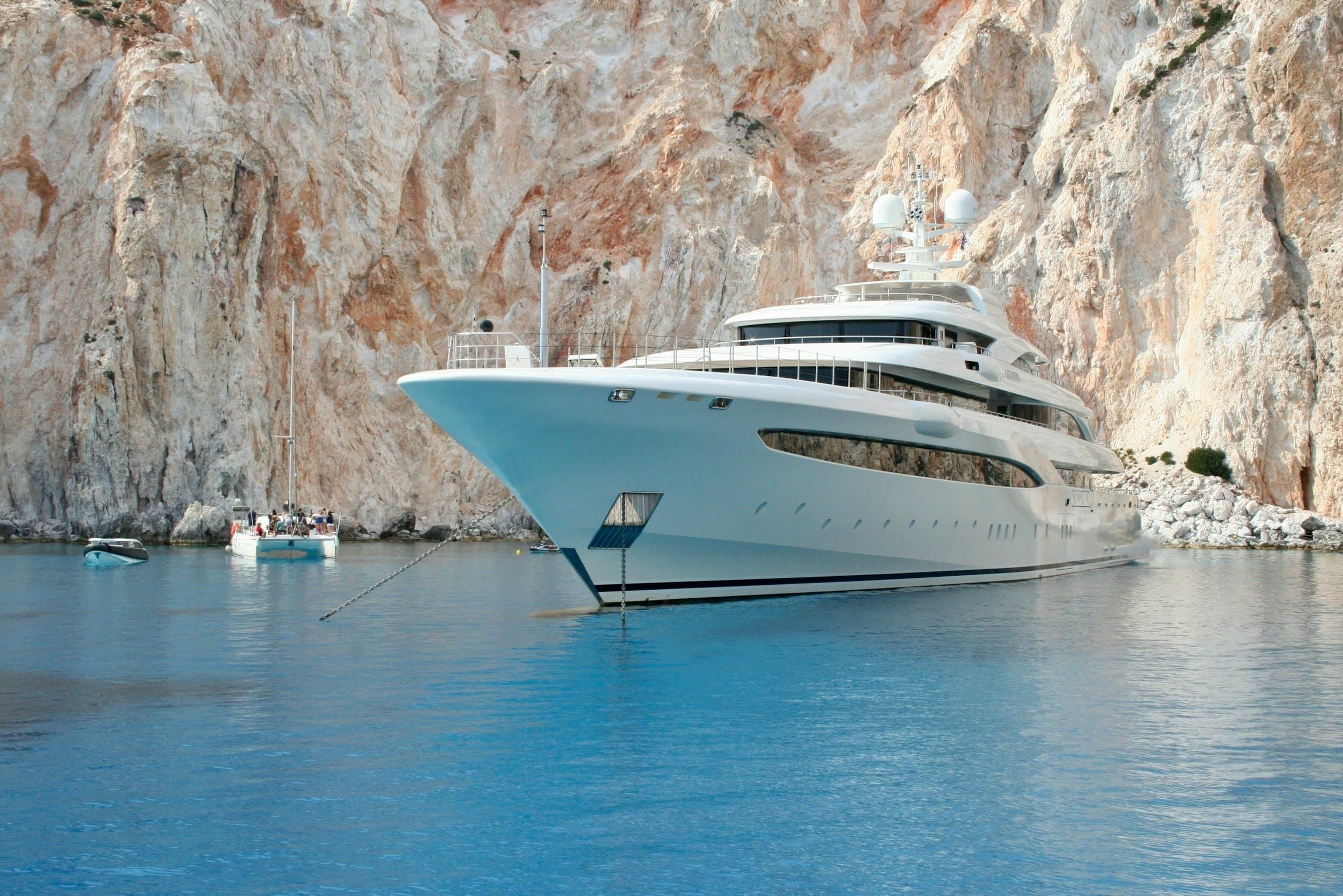
St Barths yacht charter New Year's lead times are the part of this trip most people misjudge. The boat is not the bottleneck — the week is. Gustave III harbor and the anchorages off Gouverneur and Colombier hold a finite number of yachts, the airport closes at sunset, and every captain in the Caribbean has the same two weeks circled. If you are thinking about Christmas through New Year's on a crewed yacht in the Antilles, you should already be in motion 12 to 18 months out. Earlier, if the boat matters.
This is what the planning actually looks like — the lead times, the cost structure, the SBH arrival, and the tradeoffs between sitting on the wall in Gustavia versus swinging on the hook off Shell Beach.
Why NYE in St Barths books 12–18 months out
The charter fleet that works the Eastern Caribbean in winter is not large. Maybe 250 to 300 crewed yachts above 100 feet circulate between St Maarten, the BVI, Antigua, and the Grenadines from December through April. Of those, only a fraction are positioned for or willing to commit to St Barths over NYE — partly because the island caps yacht entries during peak week, partly because the best captains have repeat clients who lock the slot a year in advance.
The pattern is consistent. Repeat charterers re-book their boat for the following NYE before they fly home on January 2. By February, the desirable 50–80 meter motor yachts are gone for the following December. By summer, the mid-fleet is gone. What's left in October is what nobody wanted in February — and the prices have not come down to reflect that.
If you want a specific yacht — a known captain, a known chef, a layout that fits your group — you are booking 14 to 18 months out. If you are flexible on vessel and want any quality boat for the week, 12 months is the realistic floor. Inside of six months, you are working the cancellation list and the repositioning boats coming up from Antigua after the Charter Yacht Show.
We work crewed yacht charter the same way we work jets — through captains and management companies we know personally, not a database. That relationship is what gets you a real answer in February about December, instead of a maybe in October.
The week itself: December 26 to January 2
The charter week in St Barths is functionally fixed. Most contracts run December 26 or 27 through January 2 or 3 — seven nights, with a hard turn at the end because the next charter is starting January 3 in St Maarten or Antigua. There is very little flexibility on dates. You are not negotiating a Tuesday-to-Tuesday window. You are taking the week the boat offers, which is the week every other client wants.
New Year's Eve itself — the night of the Eden Rock fireworks, with the harbor packed gunwale to gunwale — is the single most concentrated evening in yachting. Tenders run constantly. The captain is on the bridge, not at dinner. Plan accordingly.
The SBH arrival: TNCM to the dock
Gustaf III Airport on St Barths is one of the more demanding commercial approaches in the hemisphere. Runway 10 is 2,133 feet of asphalt with a hill on short final and the beach at Baie de St-Jean off the departure end. It accepts nothing larger than a Pilatus PC-12, a King Air, or a Twin Otter — no jets, period. It is daylight-VFR only. The airport closes at sunset.
Which means almost every NYE arrival follows the same pattern: jet into Princess Juliana International (TNCM) on St Maarten, then either a 10-minute hop on a Tradewind or St Barth Commuter caravan to SBH, or a 45-minute fast ferry from Oyster Pond. Both work. The hop is faster and more comfortable; the ferry runs on its own schedule and is unsentimental about your jet's wheels-up time.
The operational mistake people make is treating the TNCM-to-SBH leg as an afterthought. It is not. Tradewind's NYE schedule fills weeks ahead. If your jet is wheels-down at TNCM at 4:30 PM local on December 27, you may not get to St Barths that day — SBH closes at sunset, which in late December is around 5:45. You sleep in St Maarten and try again at 7 AM.
The fix is to back-plan the entire arrival from the SBH closure time. Jet wheels-up from the U.S. needs to put you on the ramp at TNCM by early afternoon, customs cleared, bags transferred, and on a commuter or ferry with daylight to spare. We coordinate the private jet leg and the inter-island connection together because they are one problem, not two.
Departing January 2
The return is the same problem in reverse, compounded by every other charter group leaving the same morning. The 8 AM and 9 AM Tradewind slots out of SBH on January 2 are the most contested commuter seats in the Caribbean. Book them when you book the boat.
Harbor versus anchorage: what your week actually looks like
Where your yacht sits during the week is a real decision and most clients don't know to ask about it.
Port de Gustavia, the inner harbor, has roughly 40 stern-to berths suitable for yachts in the 30–60 meter range, with a handful of larger spots on the outer wall. Med-mooring stern-to means you walk off the passerelle directly onto the quay, three minutes from Le Select and the shops. It is convenient, social, and loud. The harbor during NYE week is a continuous party — tenders, music, fireworks rehearsals, generators. If you want to step off the boat into town, this is the move. You are also paying premium dockage and you are visible to every passerby in Gustavia.
Anse de Colombier, Anse du Gouverneur, and the lee of Île Fourchue are the anchorage alternatives. You swing on the hook in clear water, run the tender into Gustavia in 10 to 15 minutes, and have actual quiet at night. The tradeoff is logistics — every dinner reservation, every shopping trip, every guest pickup is a tender ride. In December swell, that ride is occasionally wet.
The right answer depends on the group. Couples and small parties who want town access take the harbor. Families with kids, or anyone whose week is about the boat itself rather than the island scene, take the anchorage and tender in for the nights that matter. Some captains will split the week — three nights in Colombier, three on the wall in Gustavia, NYE on the hook to watch the fireworks from your own foredeck without fighting tender traffic at 1 AM.
Ask the captain directly during the pre-charter call. A good one will have an opinion based on your preference sheet, not a default.
What it costs: APA, base rate, and the line items that matter
Yacht charter pricing has a structure that's worth understanding before you see a contract. There are three components.
Base charter fee. This is the boat and crew for the week. It varies by length, build year, and reputation — a 50-meter newly-refit motor yacht with a known chef commands a meaningful premium over a 50-meter older hull with a less experienced crew. NYE week itself runs a peak surcharge over the standard winter rate, typically 15 to 30 percent above December 1–24 pricing on the same vessel.
APA — Advance Provisioning Allowance. This is the operating kitty. Industry standard is 25 to 35 percent of the base fee, deposited before the charter. It pays for fuel, dockage, food, beverage, port fees, customs, fireworks-night reservations, and anything else consumed during the week. The captain reconciles it at the end and refunds the unused portion or invoices the overage. APA is not profit — it is a pass-through. But on a NYE St Barths charter, APA burns faster than any other week of the year. Gustavia dockage during peak week is several multiples of off-season. Fuel for tender runs and any island-hopping adds up. Restaurant reservations at Bonito or Bagatelle for ten people on December 30 are a number you will feel.
VAT and delivery. St Barths charter is generally subject to French VAT on the base fee — currently around 10 percent under the reduced rate that applies to certain charter structures, though the specifics depend on itinerary and contract. Some charters include a delivery or repositioning fee if the boat is coming from St Maarten or further. Read the contract.
What I will not do is quote a number for the week. The honest answer is that NYE St Barths charters span an order of magnitude depending on the boat, and any specific figure I gave you would be wrong for your situation. What I can tell you is the cost drivers — vessel size, build year, crew reputation, harbor versus anchorage time, and how aggressively the group spends the APA. We walk through that on a planning call before anyone signs anything.
What gets booked alongside the boat
A NYE St Barths week is rarely just the boat. The full picture usually includes the jet to TNCM, the commuter or ferry to SBH, a shoreside car or driver for the days the group wants to be on the island, and occasionally a villa for an arrival night or the back end of the trip if guests are staggering in or out.
The villa-plus-yacht structure is more common than people realize. You arrive December 26, sleep ashore the first night while provisioning finishes, board the boat the morning of the 27th, and use the villa again on January 2 for a quiet day before flying out on the 3rd. It removes the worst part of charter week — the rushed turnaround day on either end.
This is the planning we do. Not because it's complicated for its own sake, but because the SBH arrival, the harbor allocation, the APA burn, and the jet schedule are one connected problem. Solving them separately is how trips fall apart on December 27 at 5 PM in a TNCM FBO.
FAQ
How far in advance should I book a yacht charter in St Barths for New Year's?
Twelve to eighteen months is the working range. Repeat clients re-book on the boat before they fly home January 2, so the desirable yachts are gone by February for the following NYE. Inside of six months you are working the cancellation list and the boats repositioning up from Antigua after the late-November charter shows.
Can I fly a private jet directly into St Barths?
No. Gustaf III (SBH) accepts only turboprops up to the size of a Pilatus PC-12, King Air, or Twin Otter, and operates daylight-VFR only. Jets land at Princess Juliana (TNCM) on St Maarten, then connect to SBH via a 10-minute commuter flight on Tradewind or St Barth Commuter, or a 45-minute fast ferry from Oyster Pond.
What is APA and how much should I budget for it?
APA is the Advance Provisioning Allowance — an operating fund deposited before the charter that covers fuel, dockage, food, beverage, port fees, and onboard expenses. Industry standard is 25 to 35 percent of the base charter fee. NYE week in St Barths runs through APA faster than any other week because Gustavia dockage and peak-week dining costs are at their annual high.
Is it better to dock in Gustavia harbor or anchor out?
Depends on the group. Gustavia stern-to gives you direct walk-off access to town, social density, and noise. Anchoring at Colombier or Gouverneur gives you quiet, clear water, and a 10–15 minute tender ride to dinner. Many captains split the week — anchorage for the quiet nights, harbor for shopping and big dinners, on the hook for NYE itself to watch the fireworks from the foredeck.
What size yacht works best for a St Barths NYE charter?
For four to eight guests, 30–45 meters typically gives the right balance of cabin space, crew size, and harbor flexibility. Above 50 meters you are mostly anchoring out — the inner harbor stern-to slots that fit larger boats are limited and contested. Below 30 meters the cabin layout starts to compromise on a week-long charter with multiple couples.
What happens if my jet is delayed and I miss the SBH cutoff?
You overnight in St Maarten and connect to St Barths the next morning. SBH closes at sunset — late December that's roughly 5:45 PM local — and there is no extending it. The fix is back-planning the entire arrival from that closure time, which means jet wheels-down at TNCM no later than mid-afternoon with the commuter or ferry already booked.
None of this is meant to make NYE in St Barths sound difficult. It is not — it is one of the better weeks of the year if you want it to be. It is meant to make clear that the planning is the work, and the planning starts a year before you sail.