The sailing yacht vs motor yacht charter question is the one that separates people who've done this before from people who are about to. Both give you a floating home in the Mediterranean or the Caribbean for a week. Both come with a captain, a chef, a stewardess, a preference sheet, and a tender. That's roughly where the similarities end. The two boats produce two different weeks — different pace, different guest count, different anchorages, different conversations at dinner. Getting the choice right is less about the boat and more about honestly reading how your group wants to spend seven days.
I've watched clients choose the wrong platform for the trip they actually wanted, and I've watched clients choose the right one and remember the week for the next decade. The gap between those two outcomes has almost nothing to do with the shipyard the boat came out of. It has to do with whether the platform matched the people.
The physical boat: what the layout actually gives you
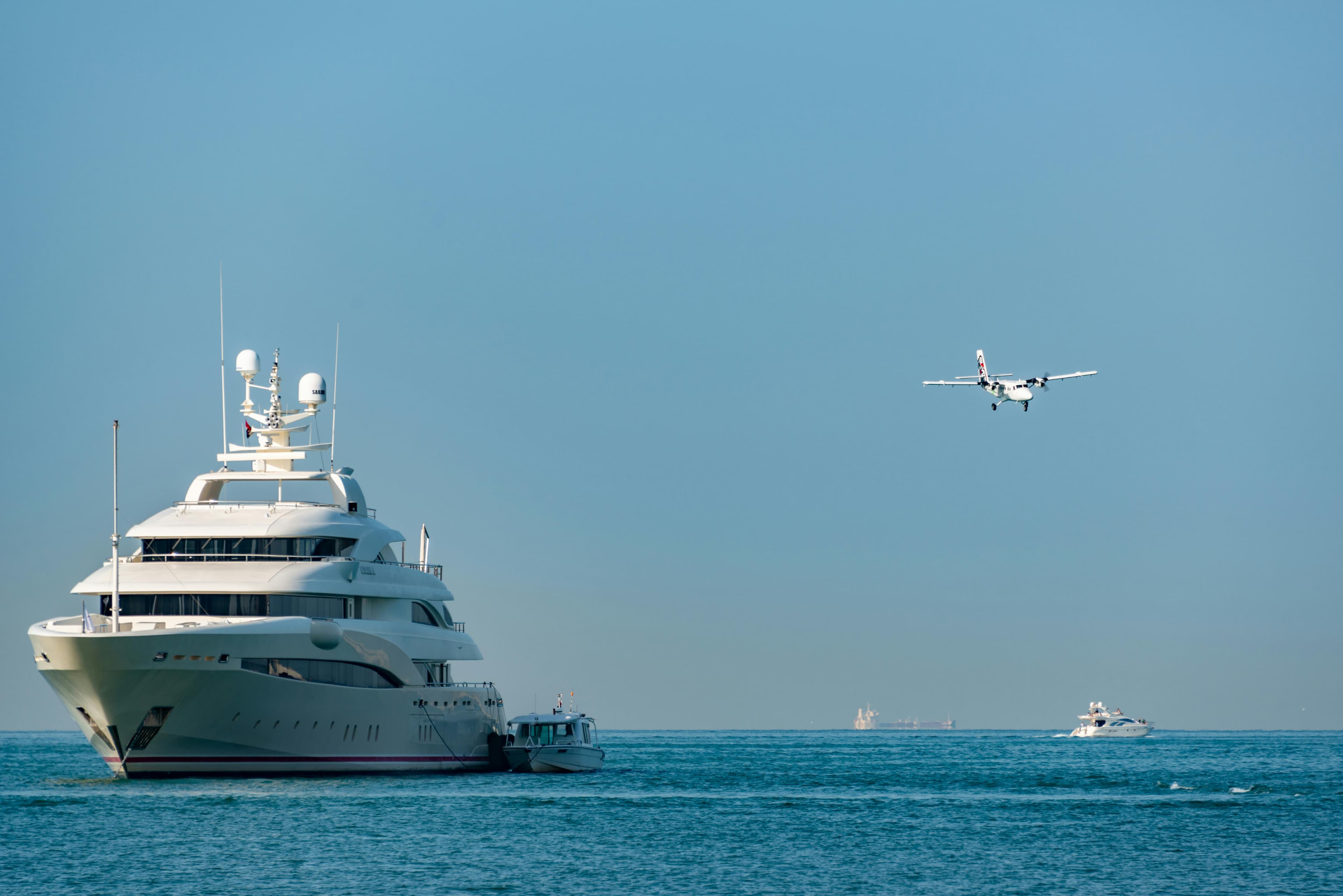
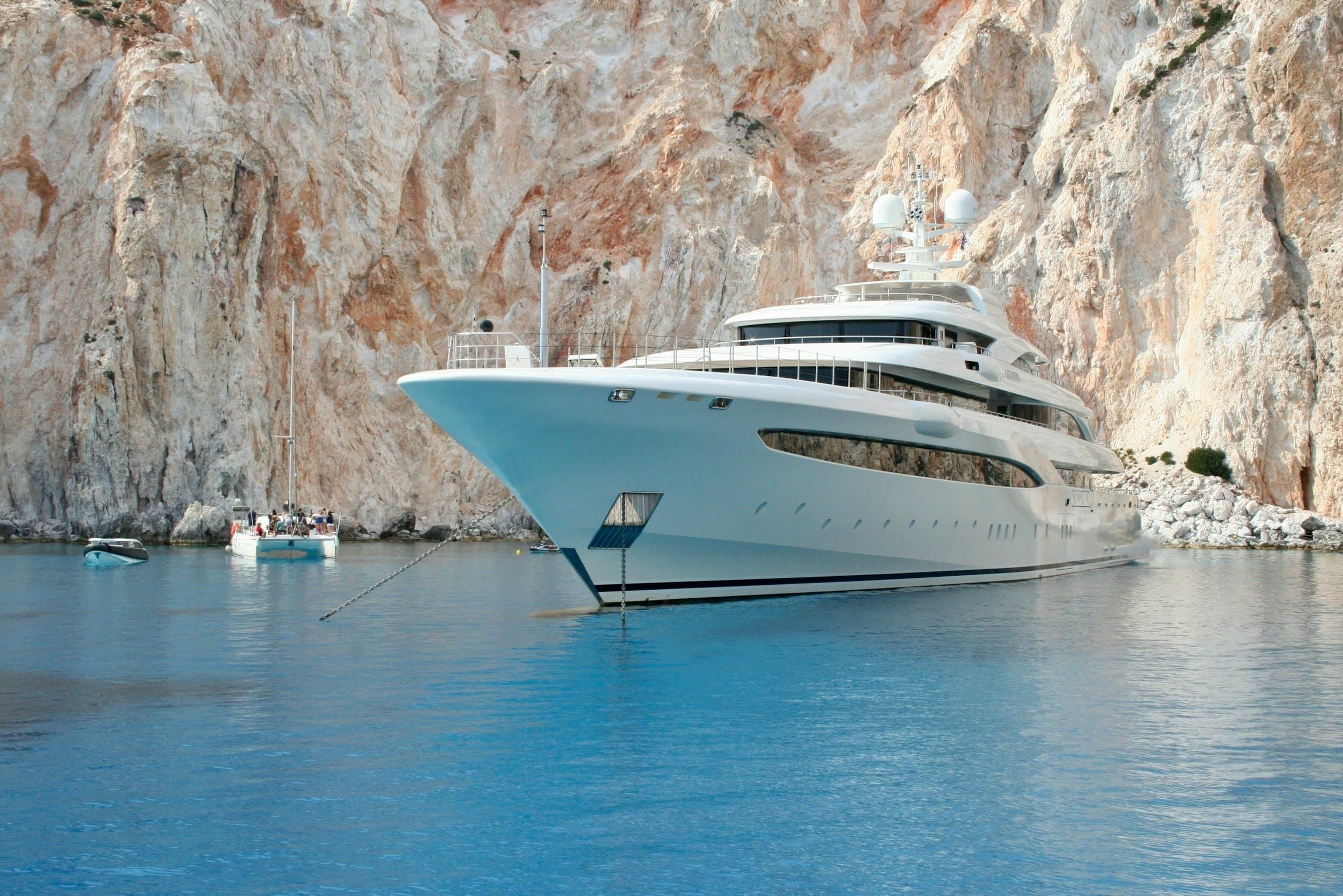
Start with the hull, because everything downstream flows from it. A 50-meter motor yacht and a 50-meter sailing yacht are not comparable interiors. The motor yacht wins on volume — usually by a factor of nearly two in gross tonnage. That extra volume becomes wider staterooms, a full beach club, a proper gym, an interior dining salon that seats twelve, and crew quarters that don't compromise the guest experience when you push the boat hard.
A sailing yacht — whether a performance sloop or a classic ketch — gives up interior volume to rig, keel, and the physics of moving under wind. The master cabin is smaller. The salon is narrower. Storage is tighter. What you get in exchange is a boat that heels, that moves quietly, that anchors in coves the motor yacht can't reach because of draft or swing radius, and that has a deck geometry built around being outside. Sailing yachts tend to have generous cockpit and aft-deck living areas because that's where guests actually spend the day.
If your group is eight adults who want private ensuites and a proper indoor dining room for the night the mistral kicks up, a motor yacht is the honest answer. If your group is six who plan to be on deck from breakfast until the second bottle after dinner, the sailing yacht's compromises stop feeling like compromises.
Draft, tender, and where you can actually anchor
One detail nobody discusses in the sales conversation: draft. A performance sailing yacht in the 40-to-60-meter range often draws four to six meters with the keel down. A comparable motor yacht draws around two-and-a-half. That difference dictates which bays you can tuck into for lunch. In the Balearics, in the Ionian, in the BVI — draft decides your itinerary as much as the captain does. Motor yachts also carry larger tenders and more toys as a rule, which matters if your kids or your guests measure a good day in seabob hours.
Pace: the week feels fundamentally different
A motor yacht is a scheduling instrument. You can move 150 nautical miles overnight at cruise, wake up somewhere new, and be at breakfast on the aft deck by nine. Charters covering St. Tropez to Portofino to Porto Cervo in a week are entirely reasonable on a motor yacht — you cover ground, you hit the ports, you do the reservations. The boat is a tool for maximizing what you see.
A sailing yacht enforces a different pace, and this is either the whole point or a dealbreaker. Under sail you make eight to ten knots on a good day. Passages become part of the trip rather than a means to it. Lunch happens underway with the engine off and the only sound the water on the hull. Your itinerary shrinks — three anchorages in a week instead of six — and the anchorages themselves get more remote because you're not chained to a marina reservation. If you charter a sailing yacht and then ask the captain to motor everywhere on schedule, you've paid for a rig you never used.
This is the honest question to ask yourself before you sign a MYBA agreement on a yacht: do you want to be somewhere new every morning, or do you want the boat itself to be the destination for long stretches of the day? There is no wrong answer. There is only a wrong pairing.
Crew culture and what dinner looks like
Crew size scales with the platform. A 50-meter motor yacht runs a crew of ten to twelve — captain, two officers, chief engineer plus assistants, chef, chief stew and two junior stews, two deckhands, sometimes a dedicated masseuse or dive instructor. Service is layered and quiet. You will rarely see the crew you don't need to see. Dinner is plated, courses come out on cue, and the interior team runs on the same beat as a well-run private club.
A sailing yacht of comparable length runs leaner — often six to eight crew — because the interior spaces are smaller and the deck operation is different. The captain is usually more visible. The chef is often working out of a smaller galley with tighter provisioning, which pushes the food toward simpler, more ingredient-driven cooking that most guests actually prefer after night three. Dinner tends to happen in the cockpit under a bimini rather than in an interior dining salon. Guests and crew talk more. If you like a formal remove between you and the people running your week, motor yachts are built for that. If you want the captain sitting down for a glass of wine to explain tomorrow's passage, that's the sailing yacht's default posture.
The chef question
On both platforms the chef is the single biggest driver of guest satisfaction. On a motor yacht you can push complexity — a tasting menu for twelve, a full raw bar setup, a beach-club dinner with a wood-fired oven wheeled onto the aft deck. On a sailing yacht the galley constrains ambition, and the good chefs lean into that with market-driven cooking off the morning stop in Bonifacio or Hydra. Both work. Neither is better. The preference sheet conversation matters more than the platform.
Cost drivers: they are not comparable line-for-line
This is where people get tripped up. A sailing yacht and a motor yacht at the same length are not priced the same, and the delta runs in both directions depending on the week.
Base charter fee tends to favor the sailing yacht at equivalent length, sometimes meaningfully. But the fee is only the start. APA — the advance provisioning allowance, usually 25 to 35 percent of the base — covers fuel, dockage, provisions, and port fees. Motor yachts burn dramatically more fuel; a heavy displacement motor yacht at cruise can consume several hundred liters per hour, versus a sailing yacht that may motor only during transits and at port arrival. On a week with a lot of movement, the fuel line on a motor yacht APA is a real number.
Dockage is the other one. Motor yachts that need Port Hercule in Monaco or the ZEA in Cannes during high summer are paying for it, and the same berth for a sailing yacht — if it's even a fit given rig height and beam — costs the same. Med VAT (currently applied on most Mediterranean charters, with rates varying by flag and cruising ground) applies equally to both. Crew gratuity, typically 10 to 20 percent of the base fee, scales with crew size, which slightly favors sailing yachts.
The honest summary: sailing yachts often come in lower on total spend for a week that involves real cruising, and motor yachts often come in higher but deliver capacity — guest count, interior space, toys — that the sailing platform can't match. Get a full APA-inclusive estimate before you compare. We build these side-by-side for clients regularly; start a conversation and we'll model both against your actual itinerary.
How to actually choose
Strip the question down to four honest inputs.
Guest count and configuration. Eight adults in four cabins is the ceiling for most sailing yachts under 55 meters. Twelve guests — the legal charter limit under the SOLAS Passenger Ship Safety Certificate that most charter yachts operate below — is comfortable on a motor yacht of the same length. If you're at ten or twelve, the sailing platform starts to feel tight.
Itinerary shape. A port-heavy week — St. Barths to Anguilla to St. Martin, or Ibiza to Formentera to Mallorca to Menorca — plays to a motor yacht. A slow week in the Cyclades, the Grenadines, or the Corsican coast plays to a sailing yacht.
Group tempo. If your group's day starts at eleven and the priority is beach clubs and dinner reservations ashore, that's a motor yacht week. If your group's day starts at seven with coffee on deck and swimming off the swim platform before breakfast, that's a sailing yacht week.
How much the boat itself matters. On a motor yacht the boat is the setting. On a sailing yacht the boat is a participant. Some guests find the sound of the winches at 6 a.m. as a passage begins to be the best part of the week. Others find it an interruption. Both are legitimate. Know which one you are.
We pair clients to platforms after a real conversation about the week they want, not a spec sheet. If you want to see options against a real itinerary — or compare the same route across both platforms — request a quote with dates and guest count and we'll build both scenarios.
FAQ
Is a sailing yacht charter cheaper than a motor yacht charter?
Often yes on base fee at equivalent length, and often yes on total spend when fuel is factored in, because sailing yachts burn a fraction of the fuel of a motor yacht at cruise. But the comparison depends heavily on itinerary. A sailing yacht that motors the whole week to keep a port-heavy schedule loses much of that advantage. Always compare on an APA-inclusive basis against the actual proposed itinerary rather than base fee alone.
How many guests can a sailing yacht comfortably charter?
Most sailing yachts in the 40-to-55-meter range are configured for six to eight guests across three or four cabins. The legal charter maximum is twelve under standard commercial yacht rules, but very few sailing yachts have the interior volume to sleep twelve without compromising the experience. Motor yachts of the same length routinely accommodate ten to twelve in genuine comfort.
Do you actually sail on a sailing yacht charter?
That depends entirely on the captain and the guests. Good sailing yacht captains want to sail — that's why they took the job — and will build the itinerary around wind angles and passages under canvas. If you tell the captain you'd prefer to motor between anchorages on a fixed schedule, they will do it, but you've bought the wrong platform. Charter a sailing yacht because you want to sail, at least for part of the week.
Which is better for families with young children?
Motor yachts generally, for three reasons: more interior space for weather days, larger and more stable swim platforms and beach clubs, and a broader toy inventory including seabobs, inflatables, and often a dedicated kids' tender. That said, older kids and teenagers often love sailing yachts — the boat itself becomes an activity, and the crew tends to involve them in trimming and helming.
Can a sailing yacht do the same Mediterranean itinerary as a motor yacht?
Usually not identically, for two reasons. Draft limits which shallow bays a sailing yacht can enter, and speed limits how much ground you can cover in a week under sail. A motor yacht can move 150 nautical miles overnight; a sailing yacht typically plans passages of 40 to 80 miles per day. Expect a sailing yacht itinerary to hit fewer ports with longer stays, not the same ports on the same schedule.
Both platforms produce great weeks. They just produce different weeks. The work upfront — matching the boat to how your group actually wants to spend the seven days — is the whole game.