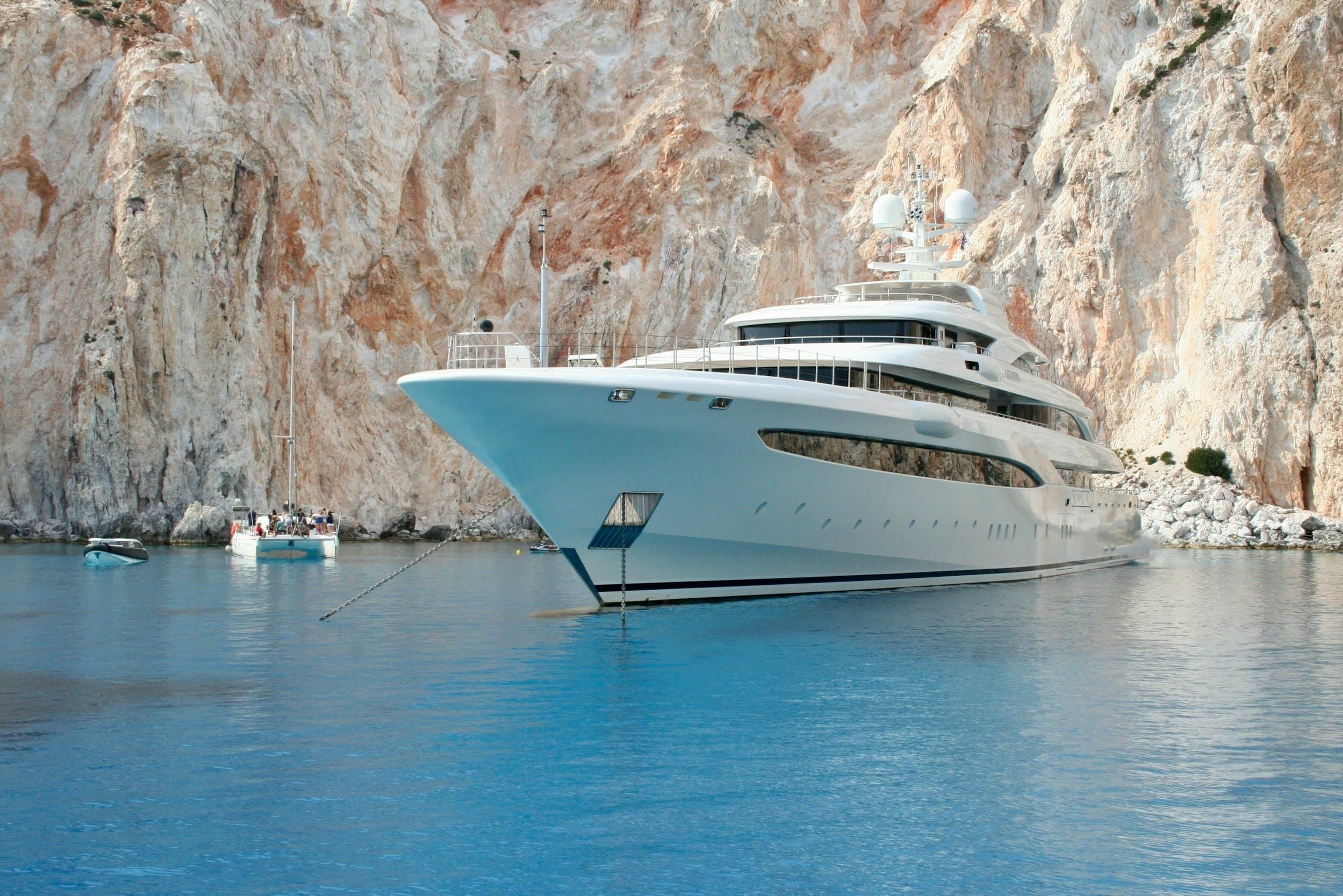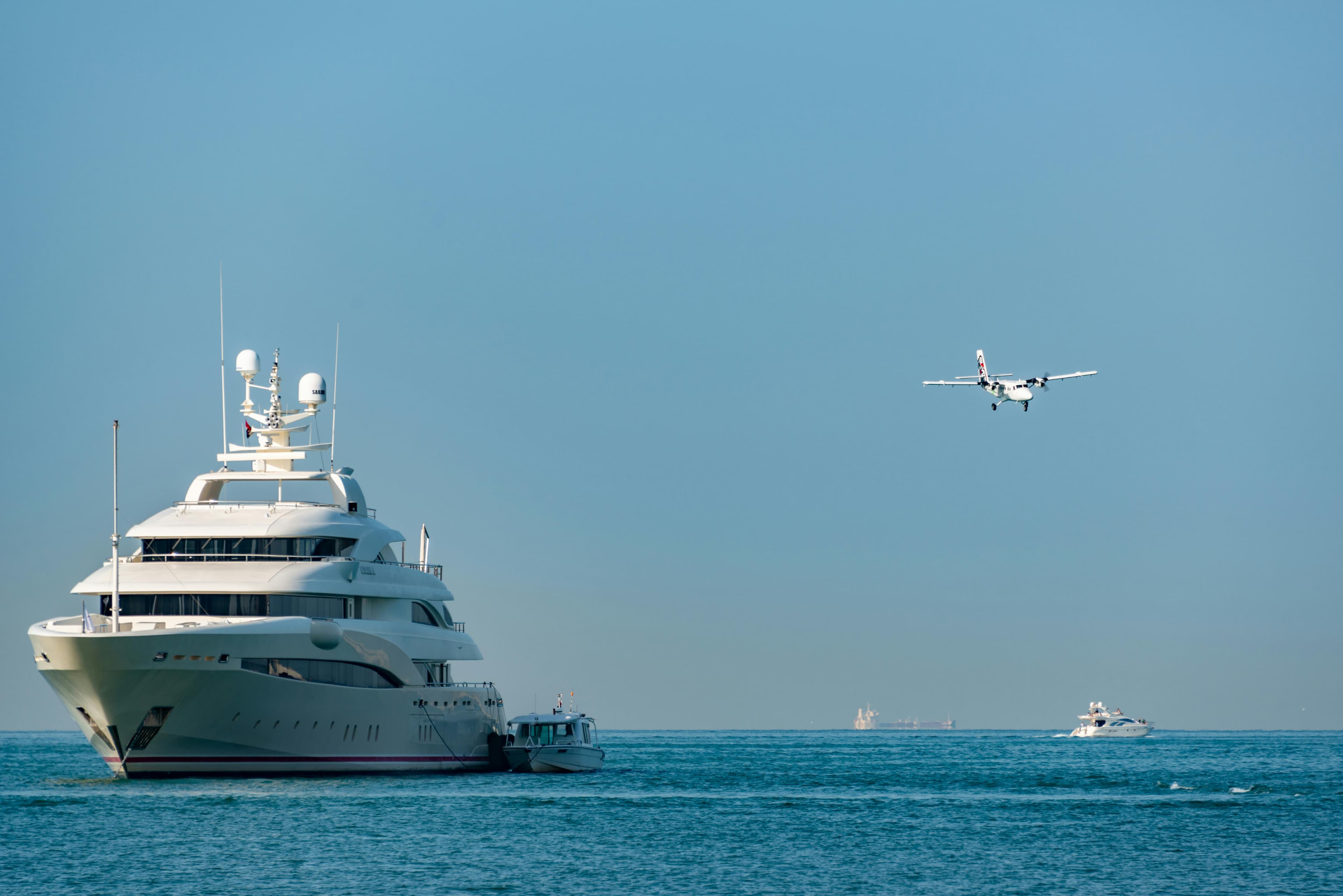
A Croatia yacht charter in summer 2026 along the Dalmatian coast is the most-requested Adriatic itinerary we book — and the one most often built wrong. The standard pitch is Dubrovnik to Split, six ports in seven nights, anchor in Hvar town for the noise. That works for a first trip. It is not what the clients who have chartered four or five times keep asking for.
The ones who know the coast skip the obvious. They fly private into Split (SPU), board within an hour of landing, and point the bow at the Kornati Islands or south toward Vis. They treat July and August as the operational challenge it actually is — slot times in Hvar harbor, ZUT park permits in the Kornati, customs clearance if the yacht repositioned from Montenegro. The week looks easy from the swim platform. It is not easy from the bridge.
This is how a crewed motor yacht week on the Dalmatian coast is actually planned, what differs from a Greek charter on paper and on the water, and where the experienced clients spend their time.
Why Split Is the Entry Point, Not Dubrovnik
Dubrovnik gets the magazine covers. Split gets the yachts. The math is operational, not aesthetic.
Split Airport (SPU) sits on a peninsula about 25 kilometers from the ACI Marina Split and the Brodosplit superyacht berths. A midsize jet — Citation XLS, Praetor 500, Challenger 350 from most European departure points — clears customs in a terminal that handles general aviation without the queue you get at DBV in August. From wheels-down to stepping onto the passerelle is realistically under an hour with a tender meet at the quay or a car to the marina. Dubrovnik in peak season can eat two hours of that with airport congestion and the drive to Gruž.
More important: Split is the center of the cruising ground. Head north and you are in the Kornati within four to five hours of cruising. Head south and Vis, Hvar, and Korčula are all inside a day. Dubrovnik puts you at the southern extreme and forces you to either repeat ports on the return or do a one-way charter, which carries a delivery fee built into the charter agreement.
For private jet sourcing into SPU, the runway is 2,550 meters — long enough for any cabin class up to a Global or G650 with normal European fuel loads. Slot coordination through Split tower in July and August is real; a good operator builds in a 30-minute buffer either side of the published time.
The handover at the dock
A well-run charter has the captain meet you at the airport, not the marina. Bags get transferred separately. You ride with the captain, get the route briefing in the car, and step onto a yacht where the preference sheet has already turned into a stocked galley and a chilled bottle of whatever you mentioned in passing six weeks ago. That detail — the captain in the car, not waiting on deck — is the single clearest tell of an operator who has done this before.
The Itinerary the Repeat Clients Actually Run
The brochure week is Split – Hvar – Korčula – Mljet – Dubrovnik. Six nights, five ports, photographed to death.
Here is the week the people who have done Croatia three times ask for instead.
Night 1: Split to Maslinica, Šolta. Ninety minutes of cruising. Quiet bay, one good restaurant on the water, no crowd. The yacht swims, the chef does a light dinner, the week starts in second gear instead of fifth.
Nights 2–3: The Kornati Islands. This is the move. The Kornati are an 89-island national park, mostly uninhabited, karst limestone, no light pollution. You need a ZUT park ticket — the captain arranges it, and it is priced by yacht length and duration. Anchor in Telašćica on the south side of Dugi Otok, tender into the village for grilled fish, swim in saltwater lakes that sit a meter above sea level on the cliff tops. There is essentially no nightlife. That is the point.
Night 4: Vis. The island that was closed to foreigners until 1989 because it was a Yugoslav military base. The result is a coast that escaped the development that hit Hvar. Anchor at Stiniva, swim through the rock arch into the cove, lunch at the yacht. Move to Komiža for the evening. The Blue Cave on neighboring Biševo before breakfast on day five — get there at 09:00, before the day-tripper boats from Split arrive.
Night 5: Hvar — but not Hvar town. Anchor on the Pakleni Islands, off Palmižana. You get the Hvar coast without the superyacht-row chaos in the main harbor. Tender into town for one dinner if you want it. Most clients do not.
Night 6: Korčula. Old town on the peninsula, walled, Venetian. Berth stern-to in ACI Korčula or anchor on the north side. This is the cultural night of the week.
Night 7: Back to Split via Brač. Lunch at Bol, the Zlatni Rat beach, then a slow run back to the marina to overnight on board before the morning disembarkation.
That is seven nights without a single repeated port, no day longer than four hours under way, and exactly one night in a place that has a nightclub. Build the yacht charter around the cruising ground, not around the marketing photos.
What Croatia Costs, Structurally, at the Crewed Motor Yacht Level
No specific numbers here — but the cost structure is worth understanding, because it is materially different from Greece, Italy, or the BVI.
A Croatian charter is built on four components: the base charter fee, the APA, VAT, and the delivery or one-way fee if applicable.
Base charter fee. Set by the yacht. Motor yachts in the 35–55 meter range with a crew of six to nine are the typical size for a family or two-couple charter on the Dalmatian coast. The fee is for the yacht and crew for the week. It includes nothing else.
APA — Advance Provisioning Allowance. Standard in Mediterranean charter. Typically 25 to 35 percent of the base fee, paid up front, used by the captain to cover fuel, food, beverage, port fees, marina berths, park tickets, customs, and the rest. It is reconciled at the end of the charter with receipts. Anything unspent is returned. Anything overspent is settled on the last day. Croatia tends toward the higher end of the APA range because port fees in Hvar and Dubrovnik in peak season are not small, and fuel for a yacht in this class moves the number quickly.
VAT. This is the line that separates Croatia from Greece on paper. Charters starting in Croatia and cruising in Croatian waters are subject to Croatian VAT on the charter fee at 13 percent. Greece uses a different structure with reductions for time spent in international waters. The Croatian rate is simpler but not necessarily lower. Build it into the budget from the start.
Delivery / one-way fee. If you want Split to Dubrovnik one-way, the yacht has to reposition to start the next charter. That repositioning gets billed. A round-trip out of Split avoids it entirely, which is another reason the experienced clients tend to start and end in the same port.
Taken together, a seven-night crewed motor yacht charter on the Dalmatian coast in peak summer comes in materially higher than the equivalent yacht in Greece for the same week, mostly because of port fees and the VAT structure. It comes in lower than the French Riviera in the same window. Get a real number for your dates and yacht class through a direct quote — the spread between yachts in the same size category is wider than people expect.
July and August: The Operational Reality
Peak season on the Dalmatian coast runs from the second week of July through the third week of August. The maestral wind builds in the afternoon — generally 10 to 20 knots out of the northwest — which makes the cruising pleasant and the anchoring straightforward on the leeward side of the islands. The bora, the cold northeast wind that can blow 40-plus knots, is rare in summer but not unheard of. A good captain watches it and reroutes without asking.
Three things genuinely matter in July and August:
Hvar town berths book out. If the itinerary requires a stern-to berth in Hvar harbor on a specific night, the marina needs to be locked weeks in advance. The Pakleni Islands anchorage workaround exists for a reason.
The Kornati park ticket needs to be in hand before entry. Rangers do check. The captain handles it, but it has to be sorted before the yacht crosses the park boundary.
Customs if the yacht repositioned from Montenegro or Italy. If your yacht was on charter in Montenegro the week before yours, it clears Croatian customs at Cavtat or Dubrovnik before reaching Split. That is the operator's problem, not yours, but it explains why some yachts are not available for a Saturday-Saturday turnaround in mid-August.
The ground arrangements on the bookend days matter as well. Split to the marina is short, but on a Saturday in August with three cruise ships in port, the wrong driver in the wrong car turns 25 minutes into 75. Plan it.
FAQ
When should I book a Croatia yacht charter for summer 2026?
For July and August 2026, the better motor yachts in the 40-meter-plus range are already being held on option as of late 2025. Book by February for peak weeks, earlier if you want a specific yacht. The yachts that go first are the ones with a known captain and a track record on the Dalmatian coast — owners and charter managers protect those bookings.
How is a Croatia charter different from a Greek charter?
Three main differences. VAT is a flat 13 percent on the charter fee in Croatia versus a reduction-based structure in Greece. Cruising distances are shorter in Croatia — most legs are under four hours, where Greek itineraries often involve longer passages. And the Croatian coast is more sheltered, which means smoother cruising for guests prone to motion sickness.
Can we fly private directly into Split?
Yes. Split Airport (SPU) handles general aviation up to and including heavy jets, with a 2,550-meter runway. Slot coordination in peak summer requires advance planning. The general aviation handler is efficient by Mediterranean standards. Most charters from Western Europe are flown on a midsize or super-midsize jet; from the US East Coast it is typically a heavy with a tech stop or a one-stop routing.
What size yacht makes sense for a family of six on the Dalmatian coast?
A crewed motor yacht in the 35 to 45-meter range with four to five cabins and a crew of six to eight is the sweet spot. Larger yachts cannot enter some of the smaller anchorages in the Kornati and the Pakleni Islands without anchoring further out and running longer tender shuttles. Smaller yachts compromise on guest space and crew-to-guest ratio.
Is the APA refundable if we do not spend it?
Yes. The APA is reconciled at the end of the charter against receipts the captain provides. Any unspent balance is returned to you, typically within a few days of disembarkation. If the charter overspends — usually because of fuel on a high-cruising week or unusually expensive port fees — you settle the difference on the last day before the yacht is released.
Do we need to tip the crew, and how much?
Yes. Standard Mediterranean charter gratuity is 10 to 15 percent of the base charter fee, paid to the captain at the end of the week for distribution among the crew. It is not optional in practice. A crew of seven working a seven-night charter has earned it.
If you want this trip built around your dates and your guest list rather than around a brochure, talk to us directly. The week works when the route fits the people on board, not the other way around.