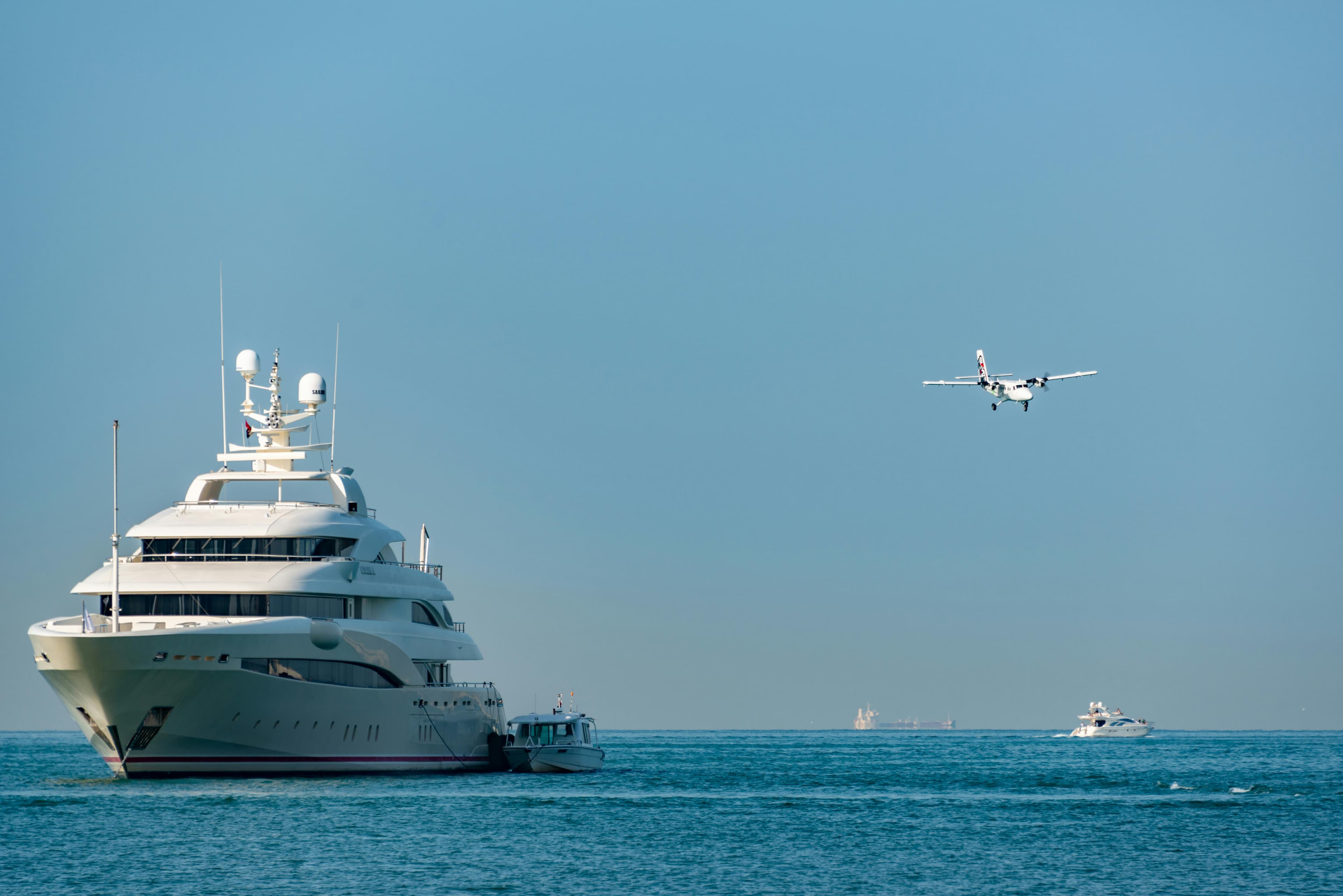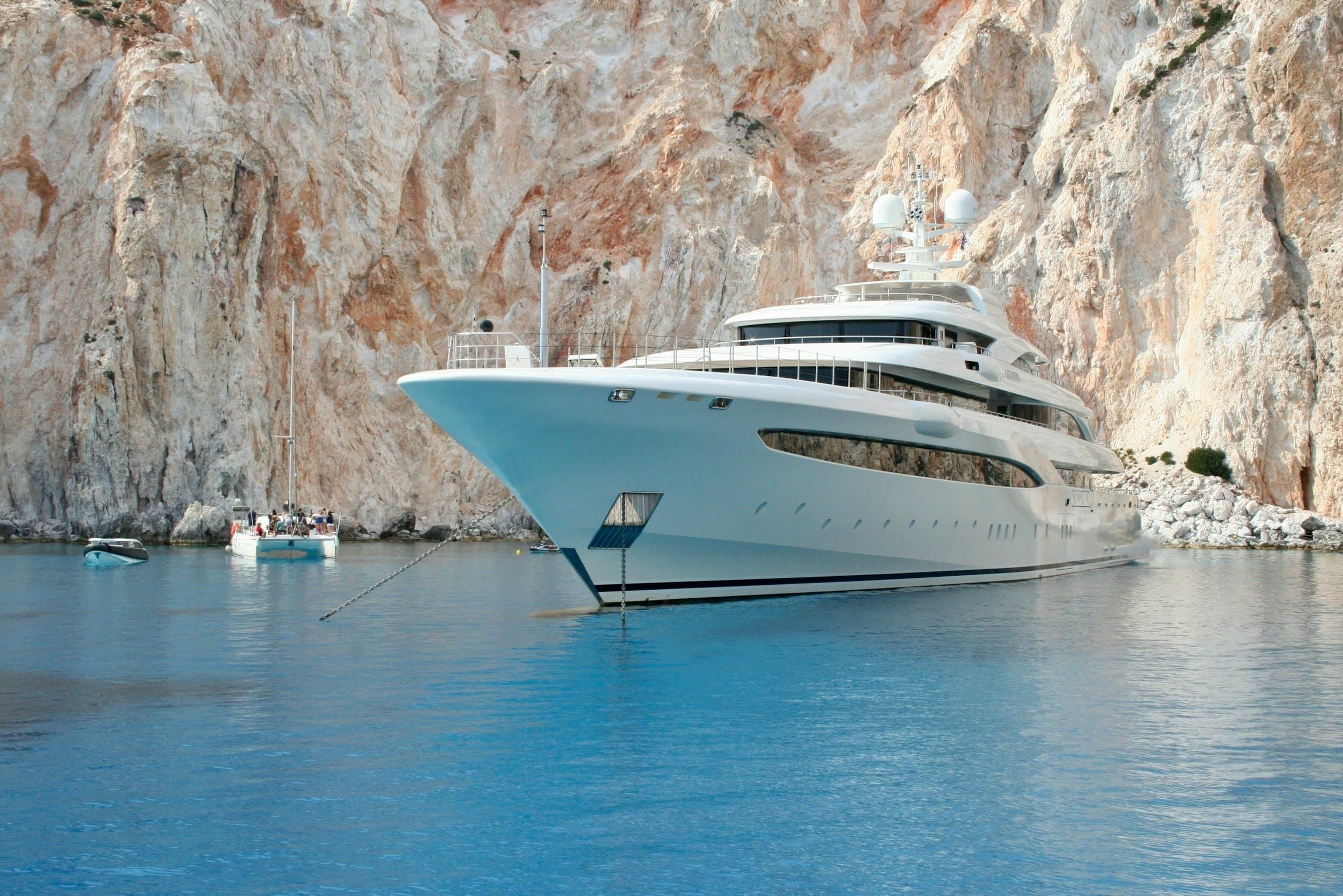
A Greek islands crewed yacht charter for summer 2026 is two completely different trips depending on which side of the country you point the bow. The Cyclades and the Ionian share a flag and a language. Almost nothing else. Picking between them is the single most consequential decision of the planning process — more than the boat, more than the crew, more than the week you choose. Get it right and the rest of the trip falls into place. Get it wrong and you'll spend the week wishing you were somewhere else in the same country.
We book both. We have crews we trust in both. What follows is the operational shape of each, who tends to choose what, and the practical considerations that show up once contracts are signed and the yacht is provisioning.
The Cyclades: glamour, wind, and a calendar built around being seen
The Cyclades are the postcard. Mykonos, Santorini, Paros, Naxos, Ios, Milos, Folegandros. White-cube architecture, dry brown hills, blue water that goes almost black in the deeper channels. This is where the charter market built its reputation in Greece, and it's where the bulk of the larger motor yachts — 40 meters and up — base for the season.
The entry point is Mykonos (JMK). It's a short-runway island airport that handles a heavy private traffic load between mid-June and early September, and slot management in peak August is genuinely tight. If you're flying in on a heavy or super-mid jet, expect a tech stop somewhere in Europe and a hard handoff to the boat's tender at the new marina at Tourlos. We plan the ground handoff door-to-tender with the captain directly — not through a third party — because the walk from arrivals to the tender quay in August heat with luggage is the moment a trip can sour before it starts.
The sailing itself is the part most first-time guests underestimate. The meltemi — the northerly wind that funnels down the Aegean from roughly mid-July through August — routinely blows 25 to 35 knots for three to five days at a stretch, with gusts higher in the channels between islands. A good captain plans the week around it: south on the strong days, north on the lulls, and never a long open crossing into the teeth of it with guests who don't have sea legs. The result is that a Cyclades itinerary is more captain-driven than you might expect. You tell the crew what kind of week you want; they tell you which order the islands come in. That's the right way around.
Anchorages in August are a planning problem
This is the part nobody mentions in the brochure. In peak August, the named anchorages around Mykonos — Ornos, Psarou, Super Paradise, Platis Gialos — are crowded with day-charter boats and other yachts by 10 a.m. The good crews are off the dock at 7:30 to claim a spot, or they skip the famous bays entirely and tuck into something quieter on Rineia or the back side of Delos. On Santorini there are no protected anchorages at all — the caldera is too deep to anchor traditionally, so yachts pick up one of a small number of municipal moorings or hold position with crew on watch. That changes the rhythm of a Santorini day completely, and it's worth knowing before you arrive expecting to swim off the boat at sunset.
The Ionian: green, calm, and built for a different kind of week
The Ionian sits on the other side of the country, west of the mainland, in water that's protected from the Aegean entirely. Corfu, Paxos, Antipaxos, Lefkada, Meganisi, Ithaca, Kefalonia, Zakynthos. The landscape is unrecognizable if you've only seen the Cyclades — cypress and olive, pine down to the waterline, hills that are actually green in July. The water is calmer, the wind is lighter and more predictable, the navigation is shorter between islands, and the cultural texture is closer to Italy than to the Aegean.
The entry point is Corfu (CFU), which has a longer runway and easier private-aviation logistics than JMK. We've moved heavies into Corfu without a tech stop more often than we've managed it into Mykonos. The drive from CFU to the marina at Gouvia is twenty minutes on a quiet road, not the August scrum of Tourlos. For a private aviation arrival with kids or older guests, the difference is meaningful.
On the water, the Ionian is what a charter broker would call "forgiving." The afternoon thermal — the maistro — typically builds to 12 to 18 knots and dies at sunset. Crossings between islands are short, sometimes under an hour. Anchorages are protected on multiple sides, holding is generally good in sand and weed, and you can usually find a quiet bay even in mid-August. The day shape is gentler: late breakfast on the hook, a short hop to lunch in a taverna on Meganisi, an afternoon swim somewhere with nobody else in it, dinner stern-to in Fiskardo or Sivota.
This is the cruising ground where first-time charter guests have the best week. Not because it's a beginner version of the Cyclades — it's a completely different experience — but because the operational margin for everything to go right is wider.
Which guests choose which
After enough seasons running both, the client profiles are predictable.
The Cyclades guest is usually returning to Greece, not arriving for the first time. They're booking around a specific reason to be in Mykonos — a friend's birthday, a hotel they want a tender ride from, a beach club that requires you to show up by boat to get the table you want. They're younger or they're traveling with younger guests. The boat is part of the social architecture of the week, not a refuge from it. Nightlife matters. Being seen at Nammos or Scorpios matters. The crew needs to be excellent at logistics ashore — reservations, transfers, the kind of fixer work that makes the difference between a 9:30 dinner and a midnight one. We choose yachts for this profile with strong AV systems, large sundecks, and crews who've worked the island circuit before and have their own relationships with the beach club managers.
The Ionian guest is often chartering for the first time, or chartering with family across three generations, or actively running away from the Mykonos version of Greece. They want the boat to be the trip, not a vehicle between nightclubs. They want lunch ashore at a place where the owner brings out whatever was caught that morning. They want kids to be able to swim off the swim platform at anchor without a parent on watch for jet skis. They're more likely to want a sailing yacht or a smaller motor yacht — 25 to 35 meters — than a 50-meter platform. They want the captain to suggest the next anchorage, not to ask them which beach club to book.
There's also a third profile worth naming: the guest who wants to do both. It's possible — a one-way charter from Corfu down through the Ionian, around the Peloponnese, and into the Cyclades takes about four to five days of mostly transit and is best done on a fast motor yacht with sea miles in the tanks. Most weeks, we steer people toward picking one. Two halves of a week in two different cruising grounds is a worse trip than a full week in either.
The practical layer: what to plan around for summer 2026
A few things to get on the calendar early if you're planning summer 2026.
Contracts close earlier than people think. The good crews on the popular boats are booked for July and August by February or March. If you're reading this in late spring and chasing a specific yacht, you're probably looking at June, September, or a second-tier boat in peak. September is the sleeper choice — water is still warm, meltemi softens, prices ease, and the islands exhale.
APA — the advance provisioning allowance — is real money. It's typically 25 to 35 percent of the base charter fee, held by the captain to cover fuel, dockage, provisioning, and shore expenses. Fuel is the biggest variable. A heavy motor yacht running fast between Mykonos and Santorini burns through APA faster than the same boat at anchor in the Ionian for a week. Build the budget honestly.
VAT in Greek waters is currently 13 percent on charter fees for trips that begin in Greece, with mechanics that change occasionally — confirm the current treatment at the time of contract. It's not a small line item.
Provisioning preferences matter more than guests realize. A good preference sheet, returned a few weeks before the charter, is the single best investment of planning time. Crews can source almost anything in Athens or Corfu and have it on board by embarkation, but they need the lead time. A vague preference sheet produces a vague week.
We handle all of this directly — contracts, APA accounting, preference sheets, the JMK or CFU arrival, the villa bookend if you're adding nights ashore at either end. Talk to us early if you're aiming at peak weeks; the calendar tightens fast.
FAQ
Is the Ionian or the Cyclades better for a first-time crewed yacht charter?
The Ionian, almost without exception. Calmer water, shorter crossings, more protected anchorages, easier weather windows, and a cultural pace that lets the boat be the center of the trip instead of a transfer vehicle. The Cyclades reward guests who already know how a charter week works and want a specific kind of social calendar built around it.
When is the best time to charter in Greece in 2026?
Late June and early September are the strongest windows. Water is warm, the meltemi is softer than in peak August, the islands are less crowded, and contract terms are more flexible. July and August deliver the full-volume Cyclades experience, but you trade calm anchorages and easy reservations for it. Book peak weeks by February or March of 2026 if you want first-choice yachts.
How does the meltemi affect a Cyclades itinerary?
The meltemi is a northerly wind that blows 25 to 35 knots for multi-day stretches from mid-July through August. It dictates the order of islands on your week — captains plan southbound legs on strong days and northbound on lulls, and they avoid long open crossings into it. Expect the itinerary to be captain-driven and to shift mid-week based on the forecast.
Can you do both the Cyclades and the Ionian in one week?
Technically yes, on a fast motor yacht with sea miles to spare, but we usually advise against it. The transit between the two cruising grounds eats most of the week and the result is a worse trip than a full week in either. If you want both, do two weeks, or do one cruising ground this year and the other next year.
What airport should we fly into for each?
Mykonos (JMK) for the Cyclades — short runway, busy private traffic in peak season, slot management is tight in August. Corfu (CFU) for the Ionian — longer runway, easier handling, simpler ground transfer to the marina. CFU is meaningfully easier for heavy jets and for guests who want a calm arrival.
What's typically included in the charter fee versus billed separately?
The base fee covers the yacht, crew, insurance, and standard equipment. Everything else — fuel, dockage, provisioning, beverages, shore meals, port fees, communications — runs through APA, the advance provisioning allowance, which is held by the captain and reconciled at the end of the charter. VAT on the base fee is separate and depends on the trip's start point and current Greek tax treatment.
If you're weighing the two sides of the country for next summer, the honest answer is that the right one depends on what kind of week you actually want — not which islands are more famous. We're happy to walk through both with you and tell you which of our crews we'd put you with on either side.